



79% of leads never convert into sales. Not because the product is wrong or the pricing is too high. Most of the time, the deal simply gets lost in the process.
Another study by Salesforce (2026) shows that sales teams spend only about 28% of their time actually selling, while the rest goes into admin work, searching for information, or trying to track where deals stand.
For small businesses, this problem is even bigger. When leads are tracked in spreadsheets, email threads, or scattered notes, it becomes hard to answer simple questions like:
- Which deals are moving forward?
- Which leads need a follow-up?
- How much revenue is likely to close this month?
This is exactly why sales pipeline management exists.
A sales pipeline crm gives businesses a clear view of every opportunity in progress. Instead of guessing, teams can see deals moving through defined sales pipeline stages, understand which opportunities are close to closing, and focus their effort where it matters most.
Today, many businesses use sales pipeline software to make this process easier. These platforms provide a simple visual system to track deals, organize conversations, and ensure that no opportunity quietly slips away.
In this guide, we’ll explain how sales pipeline management works, what the common sales pipeline stages look like, and how to build a sales pipeline that helps small businesses track deals and close more sales consistently.
What Is Sales Pipeline Management?

Sales pipeline management is how your team tracks every deal from the first conversation to a signed contract. Think of it as a live scoreboard for your revenue. It shows you exactly which deals are moving, which are stalling, and which ones deserve your attention right now.
At its core, a sales pipeline breaks your entire sales process into stages. A typical B2B setup runs 5 to 7 sales pipeline stages, something like:
- Lead Qualified
- First Call
- Proposal Sent
- Negotiation
- Closed
Each stage has a specific job. Each deal sits in only one place at a time. That structure is what keeps your revenue predictable.
According to Harvard Business Review, companies with a defined pipeline process grow revenue 18% faster than those without one. And the sales pipeline crm market agrees. QY Research reported that it was valued at nearly $6.9 billion in 2025 and is projected to reach $12.4 billion by 2032, nearly double, as more businesses realize that gut-feel deal tracking doesn’t scale.
So when you hear “pipeline management,” don’t think spreadsheet. Think of it as the operating system your sales team runs on. When it works, deals move faster, close rates improve and your revenue forecast stops being a prayer and starts being a plan.
Why Small Businesses Struggle to Track Deals Without a Pipeline

Most small business owners don’t start out with a formal sales pipeline. They keep deals in their head, in a notebook, or buried across a dozen email threads. That works fine when you’re juggling five prospects. It completely falls apart at fifty.
- Without a pipeline, you don’t know which deals are real and which ones just feel real. A prospect who says “sounds interesting” six weeks ago isn’t an opportunity, as they’re sitting in your mental pipeline eating up your energy.
- Small businesses also tend to treat every contact as a deal. That’s another trap. When everything is in the pipeline, nothing is. You lose sight of your actual revenue potential and start forecasting based on hope instead of evidence.
- There’s also the handoff problem. When you’re growing and you bring on a first salesperson, or a second one, there’s no way for them to pick up where you left off without a structured system. Deals die in the transition. Customers feel ignored. And revenue that was close to closing simply vanishes.
The fix isn’t complicated. Even a basic CRM pipeline management setup with clearly defined stages, a close date on every deal, and a weekly review habit changes everything. For a small business, that’s the margin between growing and stalling.
Sales Pipeline vs Sales Funnel (Quick Difference)
These two terms get used all the time interchangeably and it’s one of the most expensive mistakes in sales. They’re related, but they answer completely different questions.
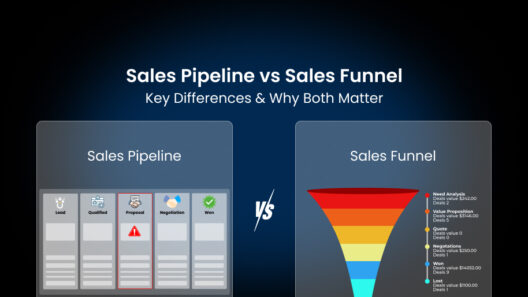
A sales pipeline is the seller’s view. It tracks where each deal sits, what stage it’s in, and what action needs to happen next. When you open your pipeline tracking software and see 10 deals in negotiation worth $240,000, that’s pipeline thinking.
A sales funnel, on the other hand, is the buyer’s view. It measures how many prospects enter the top and how many convert at each stage over time. It’s less about individual deals and more about patterns.
If we put it simply – the pipeline tells you what to do this week. The funnel tells you what to fix this quarter.
Whether you’re just starting to build a sales pipeline or upgrading your sales pipeline software , understand that a pipeline tracks execution, and a funnel tracks conversion. You need both lenses to see the full picture clearly.
Why Sales Pipeline Management Matters for Small Businesses
For many small businesses, sales activity is happening all the time, which includes calls, emails, demos, proposals. But without a clear system, it becomes difficult to see which opportunities are real and which ones are going nowhere.
That’s why sales pipeline management matters. It brings structure to the sales process so every deal is visible, every stage is clear, and follow-ups don’t depend on memory.
Instead of scattered notes and guesswork, businesses can track opportunities through defined sales pipeline stages and understand exactly where each deal stands.
The Hidden Cost of Tracking Deals in Spreadsheets
Spreadsheets are often the first tool businesses use to track leads. They are simple, familiar, and easy to start with. But as conversations grow and deals move forward, spreadsheets quickly become difficult to manage.
Teams struggle to see the full picture. Follow-ups get missed. Deals remain stuck in the same row for weeks without anyone noticing.
Many companies often fail to follow up with up to 70% of their leads, largely because there is no clear system to track conversations and next steps.
Without proper pipeline tracking software, small businesses often face problems like:
- Lost follow-ups
- Unclear deal status
- Poor revenue forecasting
What begins as a simple tracking method slowly becomes a blind spot in the sales process.
How a Structured Pipeline Improves Sales Visibility

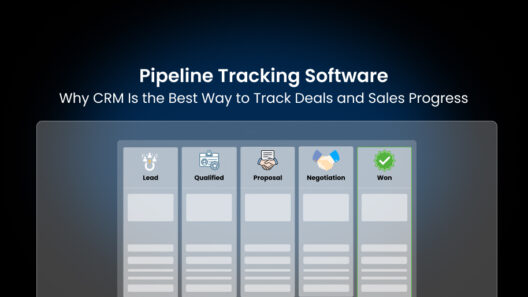
A structured pipeline changes how businesses view their sales activity. Instead of looking at a list of contacts, teams see deals moving through clear stages such as:
Lead → Qualified → Proposal → Negotiation → Closed
This structure makes it easier to understand what is happening inside the sales process. At any moment, a team can quickly see:
- How many deals are active
- Which opportunities need attention
- Which deals are close to closing
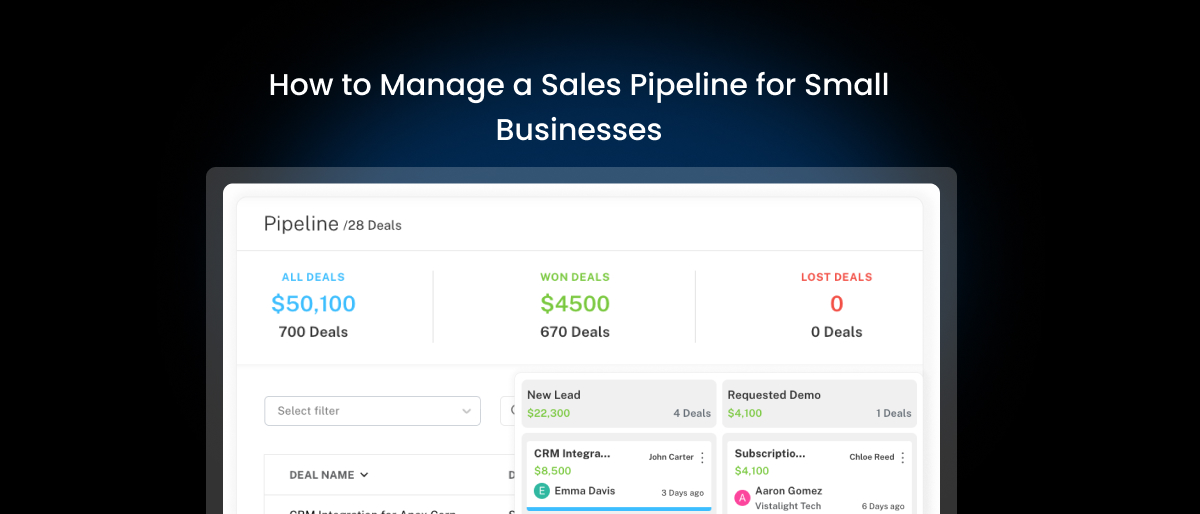
Modern sales pipeline software and CRM for small businesses make this visibility even clearer with visual boards where deals move from one stage to another. Tools like Saleoid help small businesses manage this entire process in one place, from capturing leads to tracking deals and automating follow-ups.
That clarity allows teams to focus on the right opportunities instead of chasing every lead blindly.
Why Small Teams Close More Deals With Pipeline Tracking
Small teams rarely have the luxury of large sales departments. Every lead matters, and every missed follow-up can mean lost revenue.
Pipeline tracking helps small businesses stay organized without adding complexity. Instead of relying on memory, deals are tracked in one place and progress is visible to everyone involved.
This approach also helps teams prioritize their time. They can see which deals are close to closing and which ones still need nurturing.
5 Core Sales Pipeline Stages Every Business Should Use
Not all sales pipeline stages are created equal. Some businesses use 3. Some use 10. Most get it wrong in one of two ways. They either lump everything together until the pipeline becomes unreadable, or they add so many micro-stages that reps spend more time updating their CRM than actually selling.
The sweet spot is 5 clearly defined stages that mirror how buyers actually move toward a decision.
Example of a Sales Pipeline for Small Businesses
| Pipeline Stage | What Happens | Goal |
|---|---|---|
| Lead Captured | A potential customer shows interest | Collect contact details |
| Qualified Opportunity | Lead fits your target customer profile | Confirm buying potential |
| Proposal or Demo | Product or service is presented | Show value |
| Negotiation | Pricing or terms discussed | Resolve objections |
| Deal Won or Lost | Customer decides | Close the deal |
Stage 1: Lead Captured
This is where everything starts. A lead has entered your world through a form fill, a referral, an outbound touch, or a trade show conversation. They’re in your system. But being captured doesn’t mean they belong in your pipeline yet.
A raw lead is not an opportunity. It’s a possibility. So what actually happens at the Lead Captured stage in a well-run sales pipeline? You log the lead, enrich the basic data, and begin a quick initial check. Does this person match your ideal customer profile? Is there a real problem your product solves? Do they have the authority or access to someone who does?
Speed matters here too. Responding to a new lead within one hour increases your qualification odds by 7x compared to waiting longer. Wait 24 hours, and those odds collapse. Your pipeline tracking software should flag every new lead and trigger an immediate response sequence, not leave it sitting in a queue.
Stage 2: Qualified Opportunity
This is where your pipeline gets real. A qualified opportunity means you’ve done the work. You know there’s a genuine fit, a real problem, budget access, and at least one person who has the authority to move things forward.
Getting qualification right is arguably the most important skill in sales pipeline management. Because getting it wrong is expensive. There’s something worth keeping front of mind in 2026. 61% of initial leads lack either budget allocation or purchasing authority. That’s not a reason to disqualify everyone aggressively, but a reason to have smart conversations early and get clarity on how decisions actually get made inside that organization.
When you’re learning how to build a sales pipeline that actually converts, this stage is where you separate the signal from the noise. Get it right here, and every downstream stage becomes cleaner and more predictable.
Stage 3: Proposal or Demo
By the time a deal reaches this stage, the buyer knows you exist. They’ve had the conversations. They’ve agreed there’s a problem worth solving. Now they want to see your solution, whether that’s a live product demo, a scope of work, or a formal proposal.
This is where a lot of deals go to die quietly. A few things consistently separate winning proposals from forgettable ones. Personalization is the biggest lever. Proposals that include tailored slides specific to the buyer’s needs see higher engagement.
Moreover, the majority of buyers click the pricing slide first. They’re not reading your methodology and working their way to the price. They’re checking the number immediately. If you’re hiding pricing at the back of a 20-slide deck, you’re creating friction at exactly the wrong moment.
For demos, the same principles apply. Get to the value fast. Show the specific outcomes they care about. Don’t run a feature tour, but run a relevance tour.
Stage 4: Negotiation
Reaching negotiation feels like the finish line. But it’s not. This is where many deals either accelerate to a close or slowly collapse under their own weight.
Why? Because the buying process has fundamentally changed. B2B buyers arrive at their first meeting already knowing the vendor. Most of them have already established their purchase requirements before they even speak to a salesperson. By the time you’re in negotiation, the buyer has done their homework. They know your pricing, your competitors, and roughly what the deal should look like.
This means negotiation in 2026 is less about persuasion and more about alignment. You’re not convincing them your product is good; they already believe that, or they wouldn’t be here. You’re navigating procurement, legal, budget approval, and a buying committees that often involve several stakeholders on enterprise deals.
What kills deals at this stage isn’t price. It’s stalling. Deals that go quiet in negotiation rarely recover.
Stay multi-threaded. Keep your champion engaged. Help them build the internal case. Send the ROI calculation. Shorten the path to yes wherever you can.
Stage 5: Deal Won or Lost
This is the stage that tells the truth about everything that came before it.
When a deal closes as won, great. Log it, learn from it, repeat what worked. But look at what your sales pipeline stages actually produce at this point, and the numbers are sobering.
If you’re losing deals at Stage 5, trace it back. The issue usually started at Stage 1 or Stage 2, when qualification was rushed, or follow-up was inconsistent.
A well-structured pipeline in your sales pipeline software includes a future re-engagement track. Timing changes. Budgets open. Decision-makers move jobs. A deal that died in Q1 can reopen in Q4, but only if you tracked why it died and set a reminder to check back.
How to Build a Sales Pipeline Step by Step

A sales pipeline doesn’t need to be complicated. In fact, the most effective pipelines are usually the simplest ones. The goal is not to add more steps but to create a clear path that every deal follows from the first inquiry to the final decision.
For small businesses, building a pipeline is mostly about bringing structure to existing conversations. Once deals move through defined stages, it becomes much easier to track progress, prioritize opportunities, and avoid missed follow-ups.
If you’re wondering how to build a sales pipeline, start with these five practical steps.
Step 1: Define Your Sales Stages
Every business moves deals through a few natural steps. A potential customer shows interest, a conversation begins, a proposal is shared, and eventually the deal is either won or lost.
These steps become your sales pipeline stages.
Most small businesses use a simple structure like:
- Lead captured
- Qualified opportunity
- Proposal or demo
- Negotiation
- Deal closed
The key is to define stages that reflect how your sales conversations actually happen. When stages are clear, it becomes easier to see which deals are progressing and which ones are stuck.
Step 2: Capture Leads in One Place
A pipeline only works if every opportunity enters the same system. When leads are scattered across emails, spreadsheets, and messaging apps, it becomes almost impossible to track them properly.
Capturing leads in one place ensures that every inquiry becomes a visible opportunity in your pipeline. Many businesses use sales pipeline software or pipeline tracking software for this because it automatically organizes contacts and deals in a single dashboard.
The goal is simple: no lead should disappear just because it was received through a different channel.
Step 3: Track Conversations and Follow-Ups
Most deals are won through consistent communication. A prospect may need multiple conversations before making a decision, and without proper tracking those interactions can easily get lost.
That’s why strong CRM pipeline management systems record conversations, emails, and notes alongside each deal. This helps teams quickly understand the history of a conversation and know exactly what the next step should be.
When follow-ups are visible in the pipeline, opportunities are far less likely to slip away unnoticed.
Step 4: Assign Deal Values and Probability
As deals move through the pipeline, businesses can start estimating potential revenue. Assigning a value to each opportunity helps teams understand the financial impact of their active deals.
Some companies also assign a probability to each stage. For example, a proposal stage might represent a higher likelihood of closing compared to a newly captured lead.
This simple practice makes forecasting easier and helps teams focus on opportunities that are most likely to convert.
Step 5: Review Pipeline Weekly
A pipeline is only useful if it is reviewed regularly. Successful sales teams make it a habit to look at their pipeline every week to understand:
- which deals are moving forward
- which opportunities need follow-ups
- which deals have stalled
Weekly reviews keep the pipeline accurate and prevent opportunities from staying inactive for too long.
Over time, this habit becomes one of the most valuable parts of sales pipeline management because it keeps every opportunity visible and ensures that promising deals continue moving toward closure.
Top 5 Sales Pipeline Software for Small Businesses
Not every small business wants a big-name CRM with a steep learning curve. Sometimes, the better fit is a tool that helps you track deals clearly, move opportunities through stages, and keep follow-ups organized without making the process heavier than it needs to be.
Below are five solid sales pipeline software options for small businesses that want practical pipeline tracking software without unnecessary complexity.
| Tool | Best For | Main Strength | Good Fit For |
|---|---|---|---|
| Saleoid | Flexible CRM with modular business tools | Pipeline tracking with broader business workflow support | Teams moving from spreadsheets and scattered tools |
| Salesmate | Small sales teams | Visual pipeline with automation | Businesses that want flexibility without too much complexity |
| Nimble | Relationship-driven businesses | Contact and conversation tracking | Consultants, agencies, and referral-based businesses |
| Nutshell | Simple sales management | Easy-to-use deal tracking | Teams that want a clean and practical pipeline system |
| Salesflare | Small B2B teams | Automatic data capture | Teams that want less manual CRM work |
1. Saleoid
Saleoid works well for small businesses that want more than just a basic pipeline. It helps teams manage leads, track deals, organize follow-ups, and connect sales activity with other business workflows in one place.
For businesses moving away from spreadsheets, Saleoid offers a more structured way to handle CRM pipeline management without making the system feel too technical or overwhelming. It is quite useful for teams that want affordability, flexibility, and a cleaner way to manage daily sales activity.
2. Salesmate
Salesmate is a good option for teams that want a visual sales pipeline with useful automation features. It helps businesses manage deals across custom stages, log activities, and keep follow-ups on track.
It is often a practical fit for small sales teams that need enough features to stay organized but do not want an overly complex setup process.
3. Nimble
Nimble is built more around relationships and contact management, but it also offers a simple pipeline view for tracking opportunities. It can work well for businesses that rely heavily on networking, referrals, and ongoing communication.
Its strength is keeping customer details and conversations easy to access while still giving users a basic way to manage deals.
4. Nutshell
Nutshell is known for being straightforward and easy to understand. It gives small teams a clear place to manage contacts, deals, tasks, and sales progress without clutter.
For businesses that want a no-fuss tool for sales pipeline management, Nutshell is often seen as a reliable middle-ground option.
5. Salesflare
Salesflare is designed for small B2B teams that want less manual work. It pulls in contact and communication data automatically, which makes pipeline tracking easier for teams that do not want to spend time updating everything by hand.
It can be a useful option for businesses that want automation built into their sales process from the start.
These tools show that businesses don’t always need massive enterprise platforms to manage deals effectively. In many cases, a simple pipeline tracking software solution with visual stages and clear deal tracking is enough to keep opportunities organized and moving toward closure.
If you’re new to CRM systems, it helps to understand what is sales CRM software and how it supports deal management.
FAQs on Sales Pipeline Management
Small businesses typically track deals using CRM pipeline software that organizes leads into stages such as lead captured, qualified opportunity, proposal, and closed deal. This visual structure makes it easier to monitor opportunities and ensure follow-ups happen on time.
The most effective way to track a sales pipeline is by using a CRM system that provides a visual pipeline board. This allows sales teams to see where every deal stands and move opportunities between stages as conversations progress.
Pipeline tracking software is a type of CRM tool designed to help businesses monitor sales opportunities, manage deal stages, and forecast revenue. It centralizes lead data, conversations, and deals progress in one place.
A sales pipeline is organized by dividing the sales process into stages such as lead capture, qualification, proposal, negotiation, and closing. Each deal moves through these stages as the sales conversation progresses.