
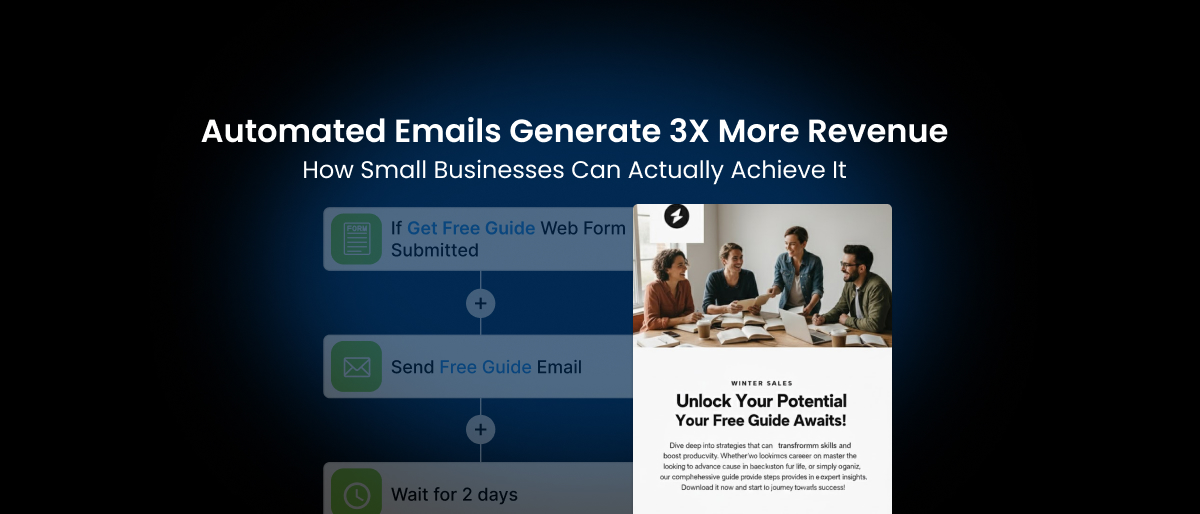

Email marketing has remained one of the most reliable ways for businesses to generate revenue, but the way it works today looks very different from traditional campaigns. Modern email marketing software for small businesses is no longer just about sending newsletters as they’ve evolved into systems that automatically respond to customer behavior, nurture leads, and maintain communication without constant manual effort.
Many small businesses still rely on manually sending promotional emails or occasional updates whenever time allows. The challenge with this approach is consistency. Follow-ups get delayed, potential customers lose interest, and valuable opportunities slip away simply because communication doesn’t happen at the right mom ent. This is exactly where email marketing software begins to change results.
Experts believe that automated emails can generate larger revenue than non-automated campaigns, largely because messages are triggered based on real user actions instead of manual scheduling. You can review a compiled industry analysis of these automation performance findings here:
The reason behind this performance gap is quite simple, i.e. automation removes timing errors and human limitations. Instead of waiting for someone to send the next email, email marketing automation for small business allows communication to happen instantly, whether a lead signs up, a customer makes an inquiry, or a user engages with a campaign.
For growing teams, this turns email from an occasional marketing task into a continuous revenue system. When email marketing runs automatically in the background, businesses stay connected with customers consistently, improve engagement, and create more opportunities to convert interest into actual sales.
The Real Problem: Most Small Businesses Still Send Emails Manually
Even with modern email marketing software available, many small businesses still manage email campaigns manually. It doesn’t feel like a problem at first until missed opportunities start adding up.
These gaps don’t stop at email, this breakdown of CRM problems for businesses shows exactly where most small teams lose revenue silently.
Let’s find out what manual email marketing usually looks like in real life:
- Newsletters sent occasionally: Emails go out only when someone finds the time, not when customer engagement is highest.
- Forgotten follow-ups: Leads who showed interest never receive the next email simply because no one remembered to send it.
- Inconsistent communication: Some customers hear from the business frequently, while others receive no updates for weeks.
- Leads slowly going cold: Without timely responses, interest fades even when initial intent was strong.
- Manual segmentation struggles: Contact lists are grouped manually, quickly becoming outdated and difficult to maintain.
The biggest misconception is that poor results come from bad emails. In reality, the problem is timing and consistency.
Revenue loss happens between emails not inside emails.
Without email automation, communication depends entirely on human effort. And for small teams juggling multiple responsibilities, maintaining consistent engagement manually is almost impossible. This is why email marketing automation for small business is something that keeps conversations moving and opportunities alive automatically.
If you’re running a startup or small team, this guide on the best sales CRM for startups can help you find the right foundation to pair with your email automation.
What “Email Automation” Actually Means
When people hear the term email automation, it often sounds complicated, like something built only for large companies with dedicated marketing teams. In reality, email automation is much simpler than it sounds. It’s not about sending more emails. It’s about sending the right email at the right moment, without having to remember to do it manually.
Think about how most customer interactions happen. Someone signs up on your website, makes an inquiry, downloads something, or shows interest in a product. Normally, you would need to notice that action and send a follow-up yourself. With email automation, the system does that part automatically.
Let’s see what that looks like in everyday business situations:
- A new lead joins your list: They automatically receive a welcome email introducing your business.
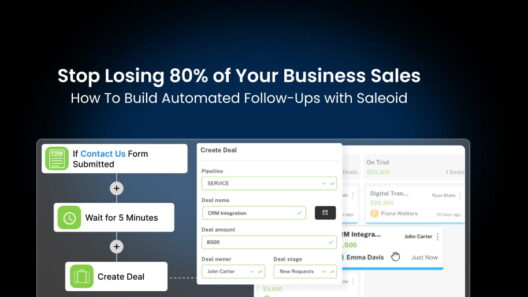
- Someone fills out an inquiry form: A follow-up email is sent instantly instead of hours or days later.
- A customer makes a purchase or booking: Onboarding or confirmation emails go out without manual effort.
- A contact stops engaging: A gentle re-engagement email is triggered to bring them back.
Nothing complicated is happening behind the scenes. The system simply follows rules you set once and continues working in the background.
The real advantage is consistency. Humans forget, get busy, or delay follow-ups when one person handles multiple roles. Automation removes that gap. Every lead receives timely communication, every customer gets the next step, and conversations continue even when you’re focused on other parts of the business.
Good email marketing software makes this process feel natural rather than technical. Instead of building complex workflows, businesses can create simple automated sequences that mirror how they would normally communicate, just without the manual work each time.
5 Email Marketing Automation For Small Business Workflows That Drive Most Revenue
When businesses hear that automated emails can generate significantly more revenue, the immediate question is usually “Which emails actually make the difference?” The truth is, most results don’t come from sending more campaigns; they come from a few well-timed workflows that keep communication moving automatically.
These workflows work because they respond to real customer actions instead of relying on manual scheduling. Each one closes a communication gap where businesses typically lose momentum, which is exactly why email marketing automation for small business consistently outperforms manual campaigns.
Below we’ve discussed 5 automated email workflows that drive the majority of results for small businesses.
Welcome & Lead Nurture Sequences
The moment someone joins your email list or shows interest in your business is when engagement is at its highest. A welcome sequence makes sure that interest doesn’t fade after the first interaction.
Instead of sending a single email and hoping the lead remembers you later, automated nurture emails introduce your brand gradually, sharing helpful information, building trust, and guiding the reader toward the next step.
Outcome: Leads stay engaged from day one, increasing the likelihood of conversion. This immediate and consistent communication is one of the main reasons automated campaigns generate stronger revenue compared to manual outreach.
Follow-Up Automation After Inquiry
Many potential customers don’t convert because follow-ups happen too late, or not at all. When responses depend on manual action, delays are almost unavoidable.
With automated follow-ups, an email is sent instantly after someone submits a form, requests information, or shows interest. The conversation continues while the intent is still fresh.
Outcome: Faster responses lead to higher engagement and better conversion rates. Automation removes the waiting period that often causes leads to lose interest or move to competitors.
Customer Onboarding Emails
After a purchase or signup, customers often need guidance on what to do next. Without structured onboarding communication, confusion or inactivity can reduce satisfaction early in the relationship.
Automated onboarding emails help customers understand your product or service step by step, including instructions, helpful tips, or next actions automatically.
Outcome: Customers feel supported immediately, improving retention and long-term value. Consistent onboarding communication strengthens relationships without requiring manual effort from your team.
Re-Engagement Campaigns
Not every subscriber stays active forever. Some stop opening emails simply because communication slowed down or became irrelevant.
Re-engagement workflows automatically identify inactive contacts and send targeted emails designed to reconnect, whether through helpful content, reminders, or renewed offers.
Outcome: Businesses recover attention from contacts who might otherwise be lost permanently. This extends the lifecycle of your audience and improves overall campaign performance without constantly acquiring new leads.
Behavior-Triggered Offers
One of the biggest advantages of modern email marketing software is the ability to respond to customer behavior in real time. When someone clicks a link, views a product, or interacts with a campaign, automation can trigger a relevant follow-up automatically.
Instead of sending generic promotions to everyone, emails become timely and context-driven.
Outcome: Higher relevance leads to stronger engagement and conversions. These personalized, behavior-based interactions are a major reason why email marketing automation for small businesses delivers better revenue outcomes than manually scheduled campaigns.
Why Automation Works Better When Email Is Connected to Your CRM
Automation becomes powerful only when emails understand who they are being sent to and why. Sending automated messages without customer context often leads to generic communication – the right message, but at the wrong time or to the wrong audience. This is one of the main reasons many email campaigns fail even when automation is technically in place.
When email operates separately from customer data, businesses lose visibility. A subscriber might already be a customer, might have recently made an inquiry, or might be actively engaging with your business, but the email system doesn’t know that. Without context, automation turns into scheduled messaging rather than meaningful communication.
This is where connecting email with CRM software for small businesses changes everything.
Before understanding how email and CRM work together, it helps to know what sales CRM software is and what it does for small businesses.
Emails Without Customer Context Often Miss the Mark
Automation works best when emails respond to real customer activity. If an email platform cannot see what stage a customer is in, new lead, active prospect, or existing client, messages become repetitive or irrelevant. Customers may receive promotions after already purchasing or onboarding emails long after they’ve started using a service.
When customer history is visible inside the same system, communication feels timely and intentional instead of automated for the sake of automation.
Segmentation Works Only When Data Is Connected
Effective segmentation depends on accurate information. Businesses need to group contacts based on behavior, interests, or engagement, not just static lists created manually.
When email marketing is connected to CRM data, segmentation updates automatically. Contacts can move between audiences based on actions such as inquiries, purchases, or engagement levels. This allows email automation to stay relevant without constant manual updates.
Timing Depends on Real User Actions
The biggest advantage of automation is timing. Emails perform best when they respond immediately to what a user has just done. These may include signing up, clicking a link, requesting information, or returning after inactivity.
Without CRM integration, timing relies on scheduled campaigns. With connected data, emails can react instantly to real behavior so that communication feel natural rather than delayed.
Workflows Need Unified Customer Records
Automation workflows are only effective when every interaction lives in one place. Sales conversations, documents, engagement history, and email activity should all connect to the same customer record. When systems are disconnected, teams must manually bridge gaps between tools, which often breaks automation flows.
Modern email marketing software works best when customer relationships and communication share a unified foundation. When email and CRM data live together, workflows become simpler, segmentation becomes accurate, and automation runs smoothly without constant adjustments.
How Small Businesses Can Implement Email Automation Without Complexity

For many small businesses, the biggest hesitation around email automation is the fear that setting everything up will be complicated. Most founders assume automation requires technical skills, long configurations, or hours spent building workflows before anything actually works.
In reality, automation becomes simple when everything needed to run email campaigns lives in one place. When leads, customer activity, and communication are already connected, automation stops feeling like a separate system and starts working as a natural extension of everyday business operations.
Let’s tell you what a practical, low-effort approach to email automation looks like and how platforms like Saleoid make it achievable without adding complexity.
Capture Leads in One Central Place
Automation can only work if new contacts enter your system consistently. When leads are scattered across forms, spreadsheets, or different tools, follow-ups become manual again.
With Saleoid, leads collected through forms, campaigns, or customer interactions automatically flow into the same workspace where sales and communication already happen. This means businesses don’t have to move data between tools before starting automation, everything begins from a single source of truth.
Segment Your Audience Automatically
Manually organizing email lists is one of the most time-consuming parts of email marketing. Contacts change behavior constantly, and static lists quickly become outdated.
Instead of requiring manual sorting, Saleoid allows audiences to be grouped based on real customer activity, such as engagement, inquiries, or lifecycle stage. Segmentation updates in the background so that businesses send relevant emails without repeatedly managing lists themselves.
Trigger Emails Based on Real Actions
The real power of email marketing automation for small business comes from responding to what customers actually do. A signup, inquiry, or interaction can instantly trigger the next email without anyone needing to press send.
Saleoid makes this process approachable by allowing businesses to create automated journeys that mirror natural communication, like welcome emails, follow-ups, onboarding messages, or re-engagement campaigns, all running automatically once set up.
Track Engagement Without Guesswork
Sending emails is only part of the process. Understanding what happens after they’re sent helps businesses improve results over time.
With built-in tracking and analytics, Saleoid shows how recipients interact with campaigns, opens, clicks, and engagement patterns, so teams can understand what resonates with their audience without relying on multiple reporting tools.
Optimize Campaigns as You Grow
Automation isn’t something you set once and forget forever. As businesses learn more about their customers, campaigns naturally evolve.
Because Saleoid connects email marketing with customer data and workflows, businesses can adjust campaigns gradually, testing messages, refining timing, and improving performance without rebuilding everything from scratch.
For small teams, the goal of automation is to remove repetitive work while keeping communication consistent. When email marketing runs inside a connected platform like Saleoid, automation becomes less about technology and more about making everyday customer interactions easier to manage.
Final Takeaway!
When people hear about email automation, they often assume it means increasing the number of emails they send. In reality, the opposite is true. Automation works because it improves when and why emails are sent, not how many.
The reason automated campaigns generate significantly higher revenue comes down to a few simple things.
- Consistency – Every lead and customer receives timely communication without depending on manual effort.
- Better timing – Emails are triggered by real actions, reaching people when interest is highest.
- Personalization at scale – Messages reflect customer behavior and journey stages instead of sending the same email to everyone.
- Workflow automation – Emails become part of a larger process, supporting sales, onboarding, and engagement automatically.
When these elements come together, email marketing stops feeling like a task you occasionally complete and starts working as an ongoing system that supports growth in the background.
If you’re looking to implement automation without complexity, exploring how a connected email marketing software like Saleoid works can be a practical next step. You can see how Saleoid brings automation, segmentation, and campaign management together.
In the end, success with email marketing doesn’t come from sending more emails but from sending the right ones, automatically, at the moments that matter most.