


Ask 10 salespeople to explain the difference between a sales pipeline and a sales funnel, and you’ll probably get ten different answers. And most of them blurred together.
That’s not knock-on salespeople. The two terms genuinely overlap in meaning, and most businesses use them interchangeably without thinking twice. But there’s a real cost to that confusion.
When your team doesn’t know whether they’re managing a funnel or a pipeline, or why both matter, deals fall through cracks, forecasts miss the mark, and no one really knows where the problem is hiding.
This isn’t a technical breakdown for the sake of it. Understanding sales pipeline vs sales funnel is practical knowledge that changes how your team works, how you report on performance, and which metrics you actually pay attention to. Let’s walk through both, get clear on the difference, and talk about what it means for your business.
What Is a Sales Funnel?

A sales funnel maps the journey your buyer takes, from the moment they first hear about your product to the moment they hand over money.
The word “funnel” comes from the shape itself. You start with a wide top, where a large number of people become aware of your brand or product. As you move down, fewer and fewer people remain.
Some people drop off after the first ad they see. Others stick around, do their research, maybe sign up for a demo, and eventually become customers. The funnel narrows because not everyone who enters at the top will make it to the bottom.
What’s important to understand is that the funnel is customer-centric. It describes what the customer is thinking and feeling at each stage. It includes their awareness, their consideration, and their intent to buy.
6 Stages of a Sales Funnel Every Business Should Know
Sales funnel stages typically look like this:
- Awareness: The prospect discovers your brand for the first time. This could be through a Google search, a social media post, a referral from a colleague, or a paid ad. They don’t know much about you yet. They may not even know they have a problem your product solves.
- Interest: They’ve taken a second look. Maybe they visited your website, read a blog post, or watched a video. They’re curious enough to stick around. This is the stage where content marketing earns its keep.
- Consideration: Now they’re comparing options. They might be reading reviews, downloading your pricing guide, attending a webinar, or talking to someone on your team. They know their problem, and they’re evaluating whether you’re the right solution.
- Intent: Something shifted. They requested a demo, filled out a contact form, or started a free trial. Their behavior signals they’re leaning toward buying.
- Decision: They’ve made up their mind. The final negotiation, contract review, or purchase happens here.
- Retention: This is where many funnel models stop, but they shouldn’t. A customer who bought once is your most likely next buyer. Post-sale experience determines whether they come back or tell others not to.
The funnel isn’t something your sales team controls. You don’t push a prospect from awareness to consideration. They move when they’re ready. Your job is to make that movement as smooth as possible by giving them the right information at the right time.
What Is a Sales Pipeline?

If the funnel describes the buyer’s journey, the pipeline describes the seller’s journey through a deal.
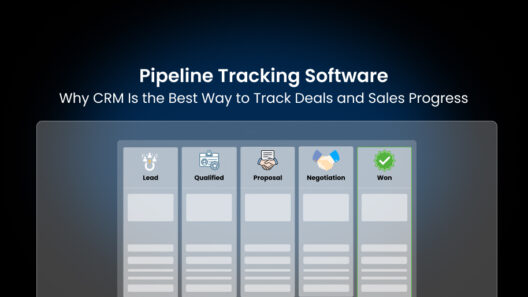
A sales pipeline is an internal view. It tracks all your active deals organized by where they currently stand in your sales process. It tells your sales manager, at a glance, how many deals are in play, what stage each one is in, what the potential value of each deal is, and what needs to happen next.
6 Stages of a Sales Pipeline Every Business Should Know
Sales pipeline stages are structured around actions your sales team takes, not emotions your buyer is experiencing. A typical set of pipeline stages might look like this:
- Prospecting: Your rep identifies a potential customer and adds them to the pipeline. They might have come from a marketing lead, a referral, or an outbound call.
- Lead Qualification: The rep reaches out and determines whether this prospect has the budget, authority, need, and timeline (BANT) to actually buy. Not every lead belongs in the pipeline. This stage filters the ones that do.
- Discovery/Needs Assessment: The rep has a real conversation with the prospect, asking questions about their goals, pain points, current setup, and what success looks like for them.
- Proposal/Quote: A formal offer is prepared and sent. At this point, the deal is real – a specific product, price, and scope have been defined.
- Negotiation: The prospect has questions. Maybe the price needs adjusting, or terms need clarification. Both sides are working toward an agreement.
- Closed Won or Closed Lost: The deal is either signed or it ends here. Either outcome gives your team useful information.
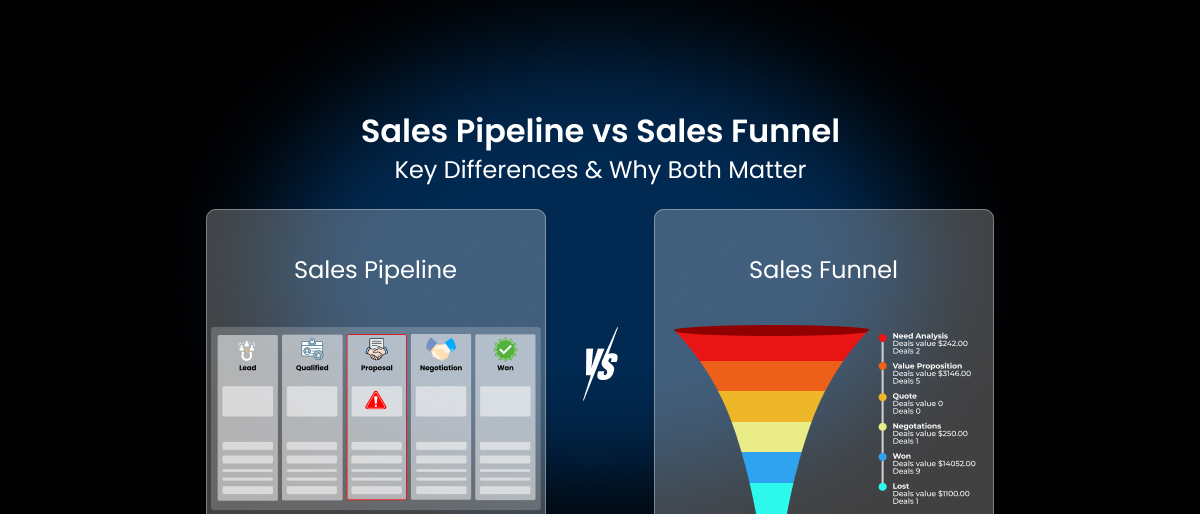
Lead stages in sales within a pipeline help managers spot bottlenecks quickly. If 10 deals have been sitting in the “Proposal” stage for 3 weeks, something is wrong. It’s either that the proposals aren’t compelling, or the follow-up is falling short. The pipeline surfaces these problems so they can be addressed.
Sales Pipeline vs Sales Funnel: Key Differences
The simplest way to put it: a funnel is about people, a pipeline is about deals.
One looks at your customer’s decision-making process. The other looks at your sales team’s working process. They happen at the same time, but they’re measuring different things and asking different questions.
The table below shows the direct comparison between sales pipeline vs sales funnel:
| Factor | Sales Funnel | Sales Pipeline |
|---|---|---|
| Perspective | Buyer’s perspective | Seller’s perspective |
| Focus | Customer journey & mindset | Deal stages & sales activities |
| Measures | Conversion rates, drop-off points | Deal volume, deal value, velocity |
| Managed by | Marketing & Sales together | Sales team & management |
| Goal | Attract, nurture, and convert leads | Track, advance, and close deals |
| Stages describe | What the buyer is thinking/doing | What the salesperson should do next |
| Shape metaphor | Narrow at the bottom (attrition) | Even stages (structured process) |
| Primary question | “Where do leads drop off?” | “Which deals need attention right now?” |
| Useful for | Campaign performance, content strategy | Forecasting, rep performance, deal management |
| Time orientation | Long-term lead behavior trends | Short-to-medium-term revenue prediction |
The sales funnel vs sales pipeline distinction matters because the insights from each one are different.
If your funnel is leaking at the “consideration” stage, that’s a content or messaging problem.
If your pipeline shows deals stalling at “negotiation,” that might be a pricing problem or a training issue. You can’t fix one with the other’s data.
How CRM Software Manages Sales Funnels and Pipelines
A CRM software for small businesses is where your funnel and pipeline live, not as separate tools, but as two views of the same customer data.
A good funnel CRM gives your marketing team visibility into how leads are moving through the awareness and nurturing stages, while giving your sales team a real-time view of every active deal in the pipeline.
The handoff between the two is the moment a nurtured lead becomes a qualified sales opportunity; it is one of the messiest points in most businesses. CRM software eliminates that mess by keeping everyone in the same system with the same information.
How CRM Software Manages the Sales Funnel
But what is a sales funnel in CRM? In a CRM context, the funnel is usually represented through lead tracking, email engagement metrics, and automated nurture workflows. You can see which leads opened your emails, which ones visited your pricing page three times, and which ones are sitting cold. The CRM scores and segments them, so your sales reps focus their time on leads who are actually ready to talk.
How CRM manages the sales funnel goes beyond just tracking opens and clicks. A strong CRM will:
- Capture leads automatically from web forms, ads, and social channels
- Score leads based on behavior and demographics
- Trigger follow-up sequences at the right time without manual work
- Notify reps the moment a lead crosses a threshold that signals buying intent
- Show which funnel stage each contact is in, across your entire database
How CRM Software Manages the Sales Pipeline
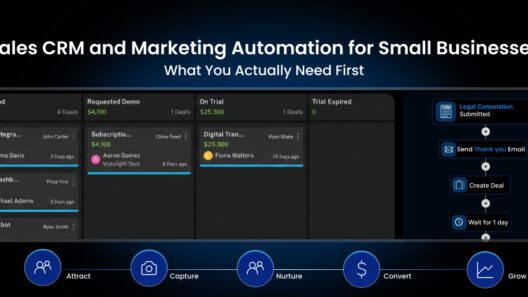
On the pipeline side, sales pipeline management in a CRM means every deal has a home. Reps can log calls and emails directly to the deal record, attach proposals, set follow-up reminders, and move deals from one CRM pipeline stage to the next with a drag-and-drop.
Managers get a dashboard that shows the whole pipeline’s health with total value, average deal size, close rate, and which reps are carrying the heaviest load.
Why a Unified CRM Matters for Small Businesses
Saleoid’s sales pipeline CRM handles both sides of this equation neatly. Rather than forcing you to manage your funnel in one tool and your pipeline in another, Saleoid brings them into a single workspace.
You can track where each lead is in their buyer journey, see exactly where your sales team is with every deal, and watch how contacts move from cold lead to closed customer, all without switching tabs or manually syncing data.
For small and mid-size businesses especially, having that unified view is the difference between managing sales reactively and running it proactively.
Many small teams struggle to track leads and deals without the right tools. Choosing the best CRM for small businesses can make the difference between scattered sales data and a clear pipeline view.
Why Businesses Confuse Sales Funnel and Sales Pipeline
The confusion is understandable because the two concepts share a lot of similarity.
- Both involve stages. Both involve leads moving from one point to another. Both live inside your CRM. And when someone says “where is this lead in the process?” the answer could apply to either one. So teams collapse them into one idea and call it a day.
- The bigger reason, though, is organizational. In companies where marketing and sales operate in silos, no one is forced to think about both. Marketing owns the funnel – they run campaigns, track awareness, and hand off leads. Sales owns the pipeline – they work deals and close business. Neither team has reason to understand the other’s lens unless leadership forces the conversation.
- There’s also a language problem. Terms like “lead,” “opportunity,” and “prospect” mean different things at different companies. One company’s “qualified lead” is another company’s “sales opportunity.” When the vocabulary isn’t standardized, it’s easy to assume funnel and pipeline are just two words for the same thing.
- Finally, a lot of the content out there treats them as synonymous. Blog posts use “funnel” to describe what is actually a pipeline. Training materials draw funnels that are really pipeline diagrams. Over time, that inconsistency becomes the default understanding across the industry.
The stakes of this sales pipeline vs sales funnel confusion are higher than most people realize. If a VP of Sales is tracking pipeline metrics but calling them funnel metrics, the fixes she applies to a pipeline problem will be the wrong fixes. You don’t solve a negotiation bottleneck by publishing more blog content. You don’t fix a top-of-funnel awareness gap by coaching your reps on closing techniques. Getting the concepts right means applying the right solution to the right problem.
In many organizations, this confusion is just one example of the broader CRM problems businesses face when systems, terminology, and processes are not aligned.
Example of Sales Funnel vs Sales Pipeline
Let’s make this concrete with a single scenario. Imagine you run a B2B software company that sells project management tools to construction firms.
The Funnel Story
A project manager at a mid-size construction company sees one of your LinkedIn posts about budget overruns on commercial builds. He clicks through to your website, reads a case study, and subscribes to your newsletter. Over the next 3 weeks, he opens four emails, visits your pricing page twice, and watches a product walkthrough video. He hasn’t talked to anyone at your company yet.
In your sales funnel, this person has moved from Awareness to Consideration. Your marketing team can see this behavior in the CRM and knows he’s close to intent. They trigger an automated email offering a free 30-minute consultation.
He books it.
The Pipeline Story
The moment that consultation is booked, your sales team creates a deal in the pipeline. It enters at the Qualification stage. The rep who takes the call determines he has a 12-person team, a project budget that fits your mid-tier plan, and a real need to replace spreadsheets before the next big project kicks off in six weeks.
The deal moves to Discovery. The rep learns more about his workflow, his team’s tech comfort level, and what “success” looks like. A week later, a customized proposal goes out. The deal advances to Proposal.
The prospect asks whether you offer quarterly billing instead of annual. After a short back-and-forth, you agree. The deal moves to Negotiation, then to Closed Won when the contract is signed a few days later.
The Parallel View
In this example, the funnel tracked how the buyer got from a LinkedIn post to a booked call. The pipeline tracked how the sales team got from that booked call to a signed contract. Both happened. Both mattered. Neither one tells the full story alone.
A sales funnel vs sales pipeline example like this shows why combining both views inside one CRM gives you the complete picture – where leads come from, why they convert, and exactly how deals progress once a rep gets involved.
Which One Should You Track in CRM Software?

Now the question becomes: sales pipeline vs sales funnel – which one should you track in your CRM software?
The honest answer is both, but for different reasons and with different teams in mind.
How Marketing Teams Use the Funnel View
Your marketing team naturally lives in the funnel view. They need to understand which campaigns are creating awareness, where leads are dropping off before reaching sales, and how long it typically takes someone to move from first interaction to becoming sales-ready. Without that visibility, marketing decisions become guesswork backed by budget rather than data.
How Sales Teams Use the Pipeline View
Your sales team, on the other hand, works inside the pipeline view. Every rep should know exactly which deals are active, what stage each one is in, and what action needs to happen next. A sales pipeline inside CRM software isn’t just a reporting feature; it’s the day-to-day workspace for managing conversations, proposals, and negotiations. When pipelines aren’t updated properly, managers lose visibility, forecasting becomes unreliable, and coaching becomes difficult.
Why Leadership Needs Both Views Together
Leadership teams need both views working together. A pipeline full of deals doesn’t mean much if the funnel isn’t producing new opportunities. At the same time, a strong funnel that feeds into a poorly managed pipeline simply creates wasted leads. The real insight comes from connecting the two, especially tracking how marketing-qualified leads convert into real sales opportunities.
This is where CRM software becomes important. Tools like Saleoid are built to bring both sides into one system rather than forcing teams to manage funnels and pipelines across multiple tools.
Why Saleoid Works Well for Startups and Small Teams
Inside Saleoid, sales teams get a visual pipeline where deals move through customizable stages that match the way the team actually sells. Each opportunity carries context such as deal value, assigned owner, activity history, and even a win probability scale that helps estimate the likelihood of closing. That makes forecasting clearer and helps teams focus on deals that are most likely to convert.
At the same time, the platform keeps visibility across the broader customer journey so marketing and sales aren’t working from separate data sources.
Another reason it works well for startups and smaller teams is its flexible structure. Instead of forcing businesses into a large bundled CRM platform, Saleoid allows teams to build their setup gradually. Companies can start with a custom plan from $5 per month, add tools only when they need them, and expand later by adding additional apps at about $1 per app. For teams that prefer a ready-made setup, bundled plans start from $19 per month.
For startups, solo founders, and small sales teams, this means adopting a CRM without committing to an expensive tech stack before the business actually needs it.
If you’ve been relying on spreadsheets, scattered notes, or a CRM that your team barely opens because it’s too complicated, moving to a system that tracks both funnel activity and pipeline progress properly can dramatically improve visibility.
Your funnel shows how leads arrive.
Your pipeline shows how deals close.
When both are visible in one place, you finally get a complete picture of how your sales process really works.