



If you’re running a startup, every tool you add to your stack matters. Not just because of the cost, but because once your team starts using something, switching later becomes painful. That’s why picking the right pipeline tracking system for your startup, also popularly called sales pipeline management for startups, deserves more thought than most founders give it.
Many startups start with spreadsheets, notes, and a few reminders scattered across inboxes. It works for a while. But the moment deals start coming in from multiple conversations – emails, demos, referrals, inbound leads – things begin to slip. Someone forgets a follow-up. A deal sits untouched for two weeks. A promising lead quietly disappears.
At that point, most founders realize they need a proper way to manage pipeline visibility without hiring a dedicated admin to run it. Before choosing a tool, it also helps to understand the difference between a sales pipeline vs sales funnel, since the two are often confused but serve different purposes.
The problem is that the market is overwhelming. There are hundreds of tools promising better pipelines, smarter automation, and faster sales. Some are built for large sales teams with dedicated RevOps. Some are overloaded with features a five-person team will never touch. Others look affordable at first but get expensive fast as you add users.
For a startup operating on a tight budget, picking the wrong setup can slow down your sales process and waste time that should be spent closing deals.
That’s why it’s worth stepping back and looking at the options carefully before committing to one. If you’re about to set up pipeline tracking for your startup, this list should help you make that decision with far more clarity.
Why Startups Need a Pipeline CRM
There’s a phase every early-stage company passes through where the founders are doing the selling, they know every deal personally, and things more or less stay on track through sheer memory and energy. That phase ends the moment a second or third salesperson joins the team.
A startup’s sales cycle is rarely a straight line. Prospects go quiet. Decisions get delayed. This is compounded by how buyers actually behave today, a recent Gartner survey found that a majority of B2B buyers say they prefer a rep-free buying experience, meaning founders can’t rely on a prospect to proactively re-engage. Without automated reminders and deal activity tracking, follow-ups depend entirely on individual memory, which is not a reliable system.
For a startup trying to hit its first $1M in revenue, a dropped lead might represent 3% of the annual goal. This isn’t a small risk either, running out of capital is the top reason VC-backed startups shut down, and the underlying causes are usually poor product-market fit, bad timing, or unsustainable unit economics that show up long before the cash runs out. Startup sales tools that track lead activity, flag inactive deals, and automate outreach sequences protect revenue that would otherwise be left on the table.
Let’s explore where the cracks show up without a proper system in place:
1. Deal visibility disappears fast
When deals are tracked in a rep’s personal inbox or a spreadsheet that gets updated inconsistently, no one can see the full picture. A founder trying to understand where revenue is coming from has to ask each salesperson individually, compile the answers manually, and hope the result reflects reality. A pipeline CRM gives everyone the same live view – deals by stage, deal value, rep ownership, and expected close dates, without anyone having to compile a report.
2. Follow-ups fall through
A startup’s sales cycle is rarely a straight line. Prospects go quiet. Decisions get delayed. A “call me back in a month” response gets forgotten. Without automated reminders and deal activity tracking, follow-ups depend entirely on individual memory, which is not a reliable system. A CRM creates the structure that ensures no deal goes cold through neglect.
3. Lost leads are expensive
At scale, a handful of dropped leads is a rounding error. For a startup trying to hit its first $1M in revenue, a dropped lead might represent 3% of the annual goal. Every warm prospect that slips through costs real money. Startup sales tools that track lead activity, flag inactive deals, and automate outreach sequences protect revenue that would otherwise be left on the table.
The right startup CRM software doesn’t ask your team to change how they sell. It gives structure to the selling they’re already doing, makes results visible, and surfaces the information needed to improve without adding hours of administrative work.
Key Features Startups Should Look for in Sales Pipeline Management CRM

Before jumping into specific tools, it’s worth being clear about what actually matters for a startup context, especially since most early-stage teams don’t have anyone dedicated to running the CRM. Enterprise CRM features are often a burden to startups. A system with 200 features that your 3-person sales team uses 6 of is not a win.
Below are the features that genuinely move the needle for early-stage teams:
1. Deal Tracking That’s Frictionless
The most important thing a deal tracking CRM can do is make it easy for reps to update deal status. If updating a deal takes longer than not updating it, reps will stop updating it, the data will become unreliable, and the CRM will slowly turn into an expensive directory of contact names.
Good deal tracking in a startup CRM means one-click stage updates, activity logging that connects to email, and deal cards that show the relevant context at a glance, without digging through sub-menus.
2. Customizable Pipeline Stages
A fixed pipeline that doesn’t match your sales process is worse than no pipeline at all because it forces your team to shoehorn their real work into artificial categories that don’t reflect how deals actually move. Look for a tool for sales pipeline management for startups where you can define your own stages, rename them, reorder them, and add or remove them as your process evolves.
3. Automation for the Repetitive Stuff
Early-stage reps are busy. Automating follow-up reminders, lead assignment rules, and stage-change notifications doesn’t make the team less human. It frees them up to spend more time on conversations and less time on administrative tasks. This should be something a rep or founder can set up themselves in the CRM’s settings, using simple if-this-then-that rules, not something that requires a developer or an implementation consultant to configure. Basic automation is a must-have, not a nice-to-have.
4. Sales Pipeline Management Visibility
Pipeline management reporting should show you more than just a count of open deals. You need to know where deals are stalling, which reps have the healthiest pipelines, how long deals are sitting in each stage, and what your conversion rate looks like at each transition point. Without that data, coaching reps and forecasting revenue is guesswork.
For small teams still shaping their sales process, this guide to sales pipeline management for small businesses also offers practical ideas that apply well to startup sales operations.
5. Ease of Onboarding
A startup CRM that takes three months to implement is not a startup CRM. The best simple CRM for startups gets your team live in hours, not weeks, with a learning curve shallow enough that reps adopt it without resistance.
6. Works Without a Dedicated RevOps Person
Most startups don’t have anyone whose job is CRM administration; the founder or a sales rep sets it up in their spare time. Look for a tool where pipeline stages, automation rules, and reporting can be configured by a non-technical person in under an hour, not one that assumes a RevOps hire will maintain it.
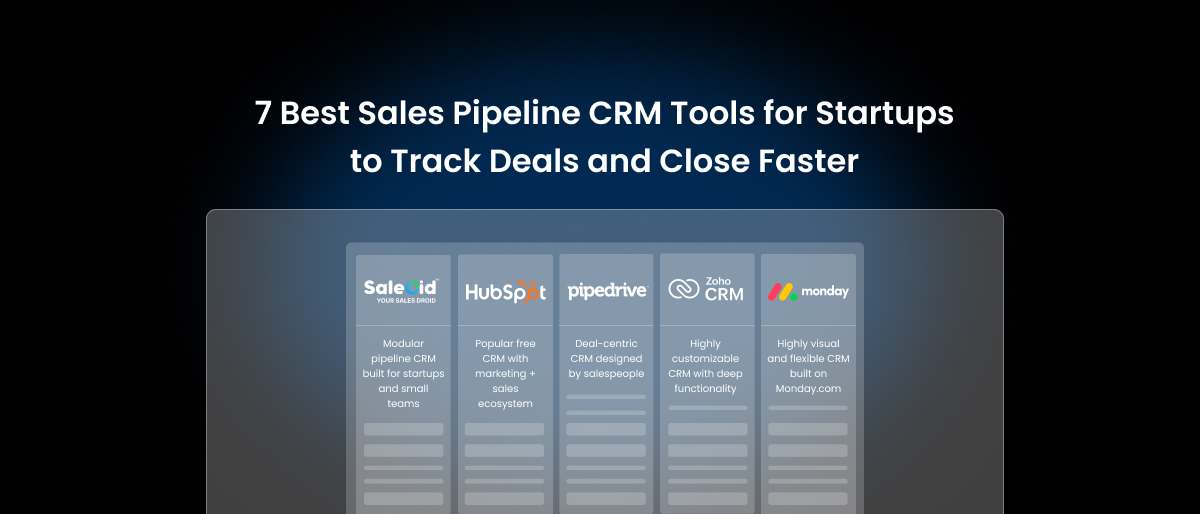
7 Best Tools for Sales Pipeline Management for Startups
| CRM Tool | Key Strength | Standout Feature | Best For | Pricing Entry Point |
|---|---|---|---|---|
| Saleoid | Modular pipeline CRM built for startups and small teams | Win probability scale, customizable pipelines, modular apps | Startups, solo founders, and small teams that want a lightweight CRM they can expand gradually | Custom plans from $5/month, bundled plans from $19/month |
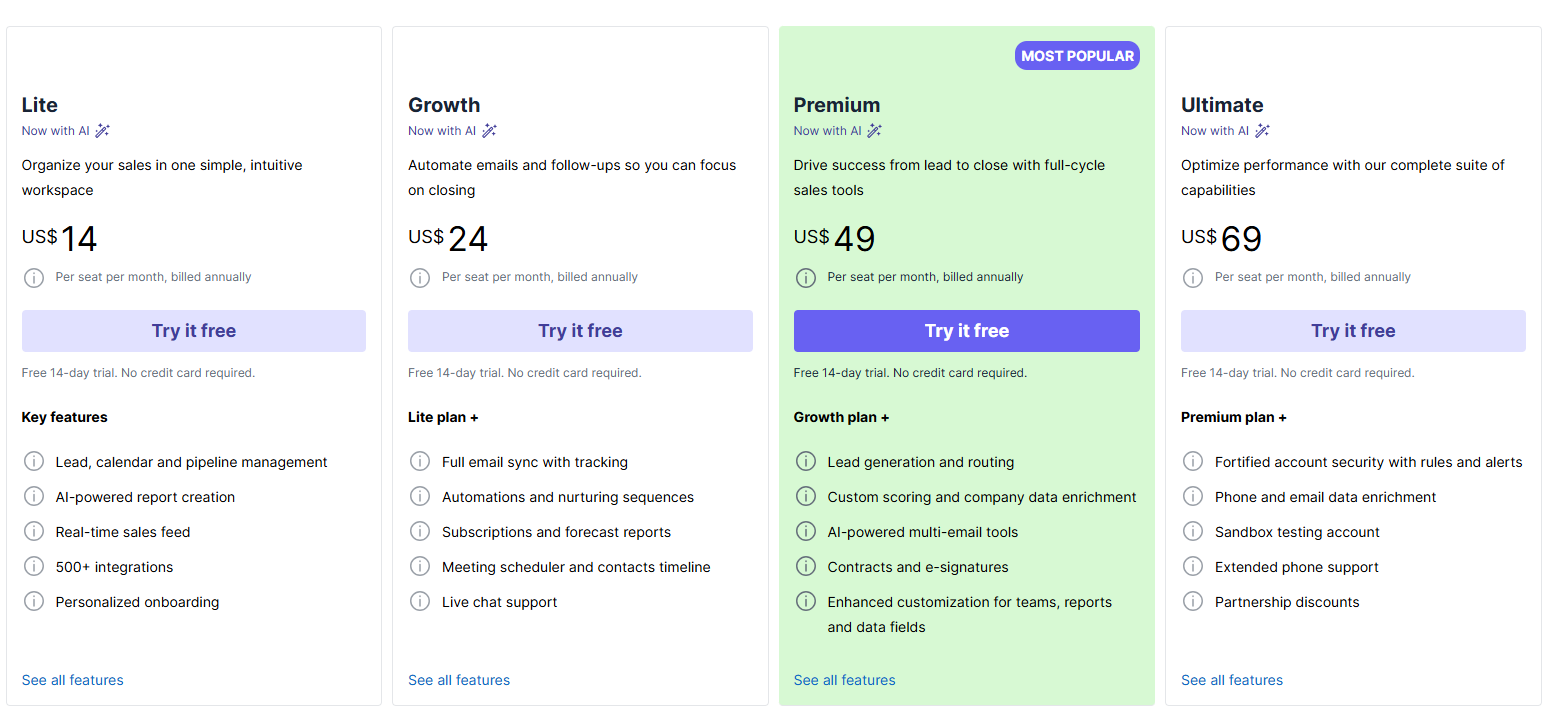
| Pipedrive | Deal-centric CRM designed by salespeople | Visual Kanban pipeline with strong deal management | Startups running outbound sales with small sales teams | Paid plans start around $14/user/month |
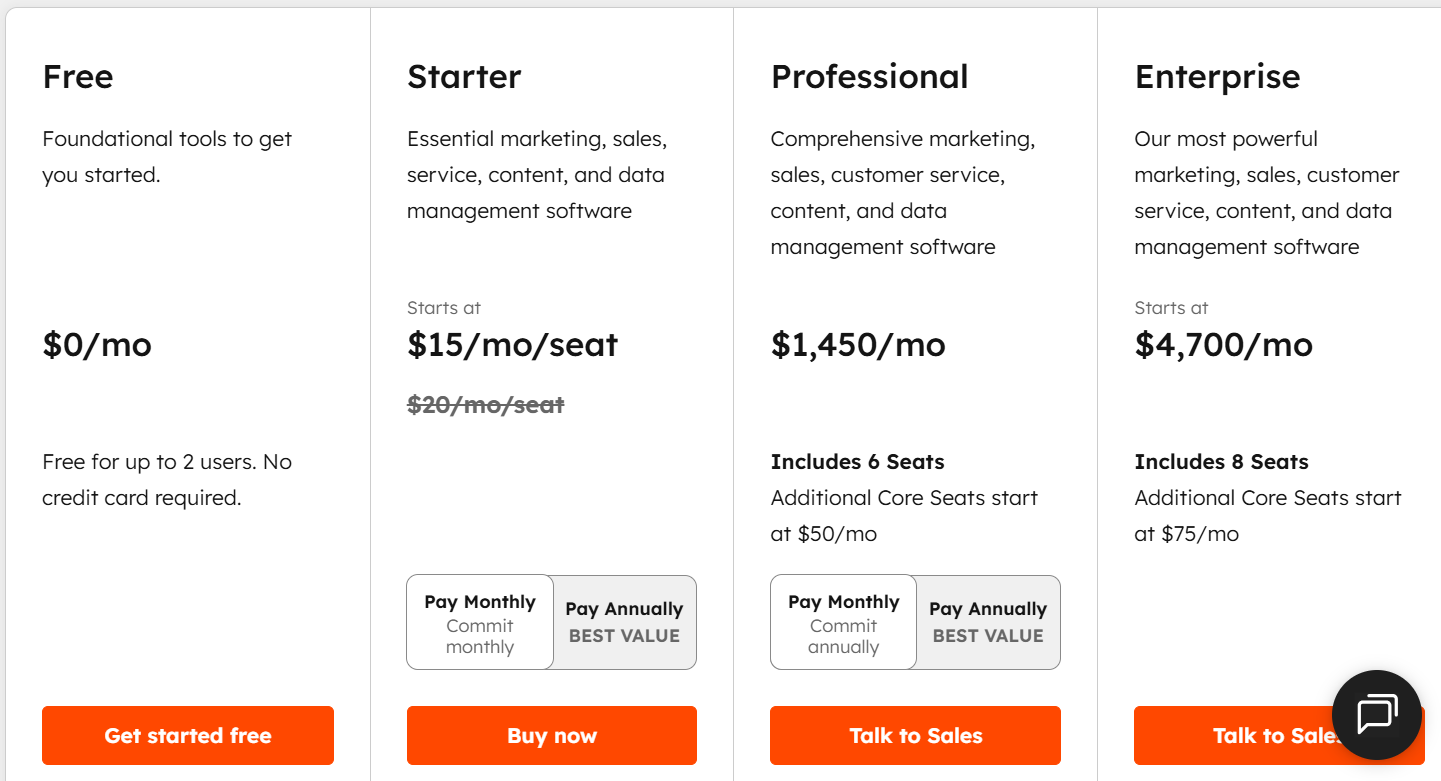
| HubSpot CRM | Popular free CRM with marketing + sales ecosystem | Free plan with contact management and pipeline tracking | Early-stage startups that want a free CRM to get started quickly | Paid tiers start from $15/seat/month |
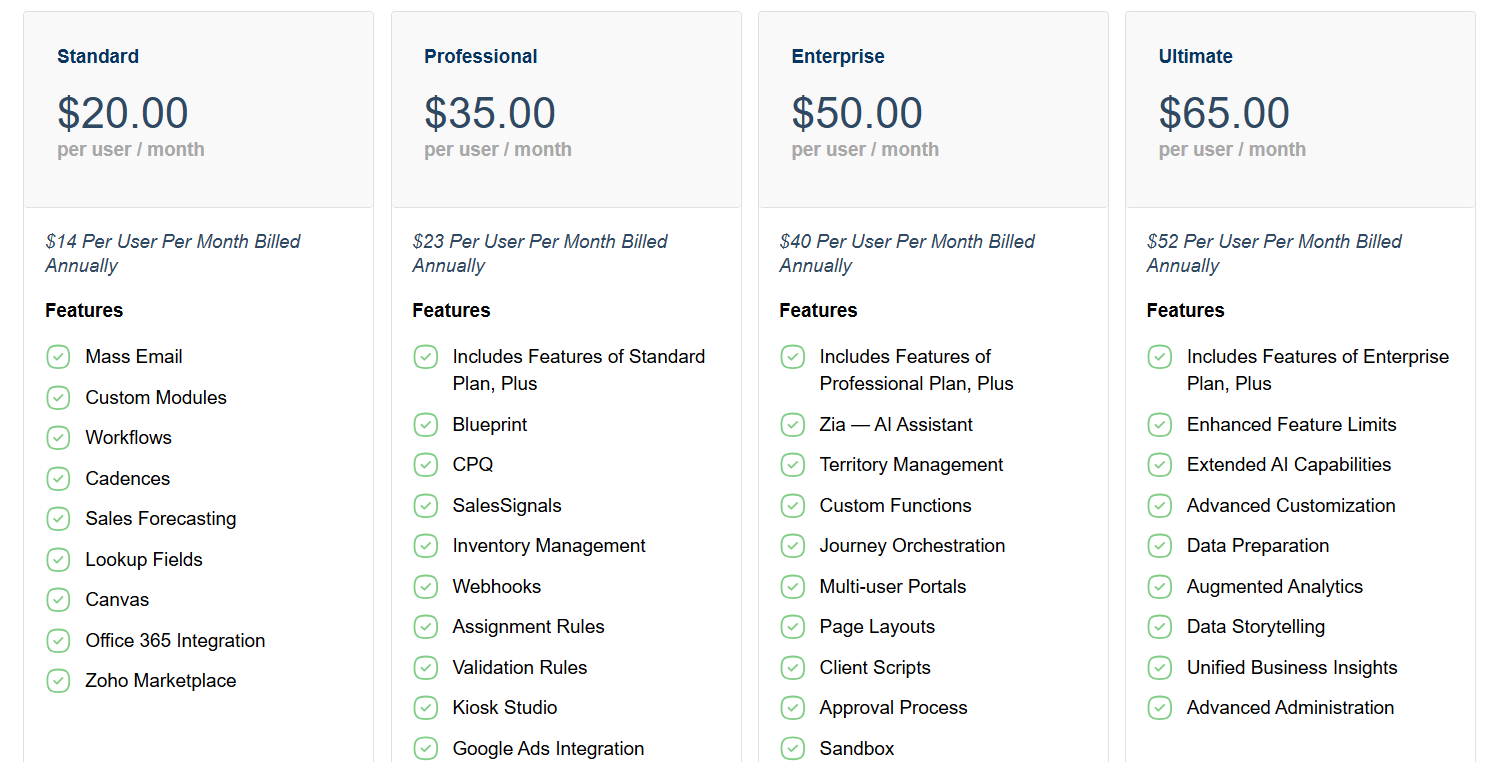
| Zoho CRM | Highly customizable CRM with deep functionality | Multi-pipeline support and automation workflows | Startups with more complex sales processes or those already using Zoho tools | Paid plans start around $20/user/month |
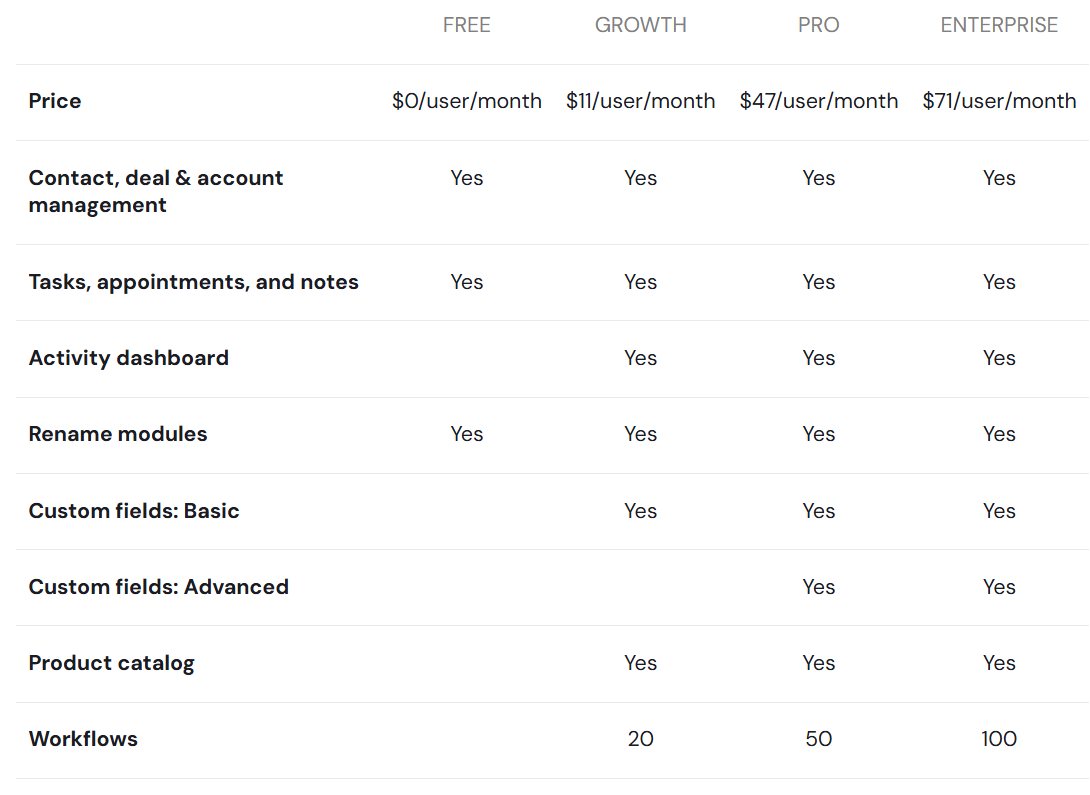
| Freshsales | AI-assisted CRM for smarter deal management | Freddy AI for lead scoring and deal insights | Startups handling high lead volumes that want AI-driven insights | Free plan available, paid plans from ~$11/user/month |
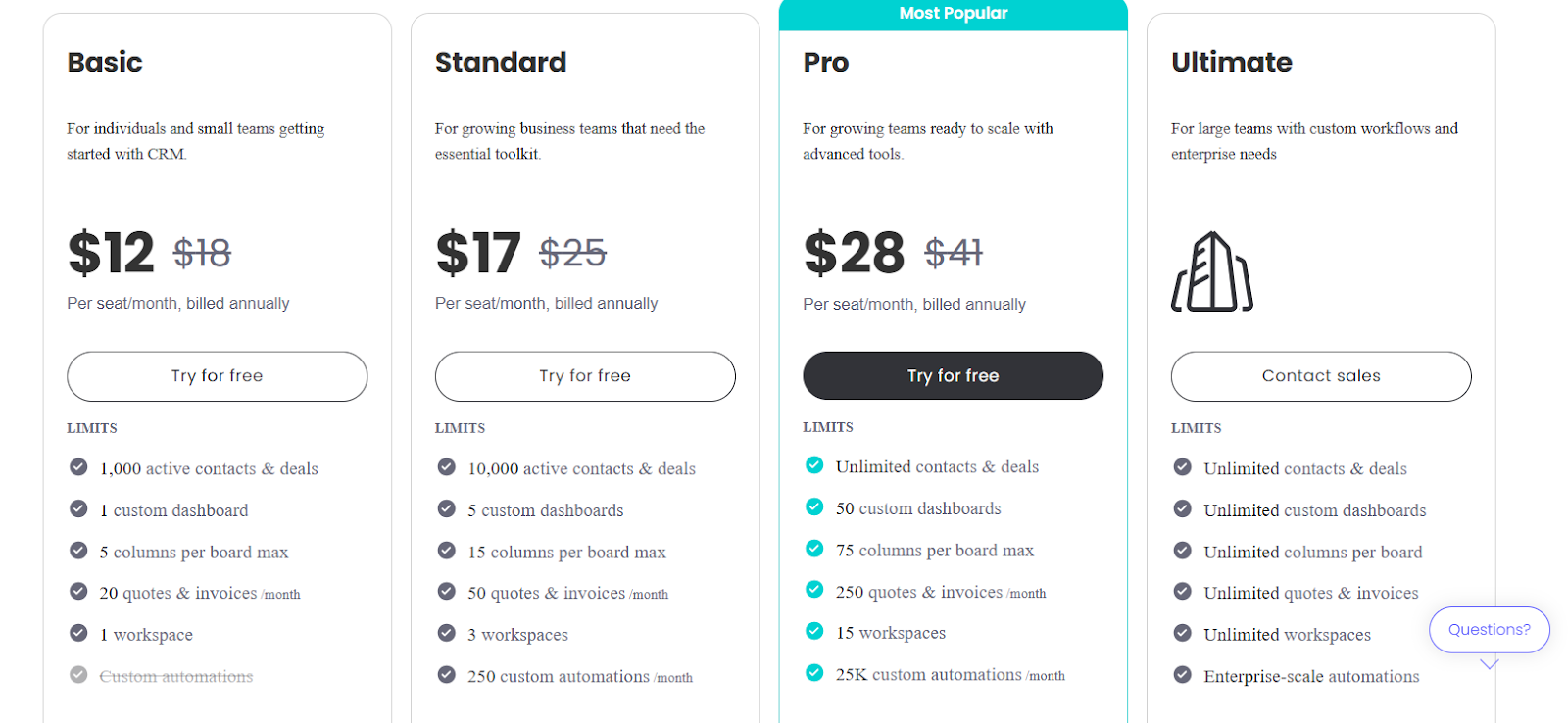
| Monday Sales CRM | Highly visual and flexible CRM built on Monday.com | Visual pipeline boards with customizable views | Teams already using Monday.com or founders who prefer visual dashboards | Paid plans start around $12/user/month |
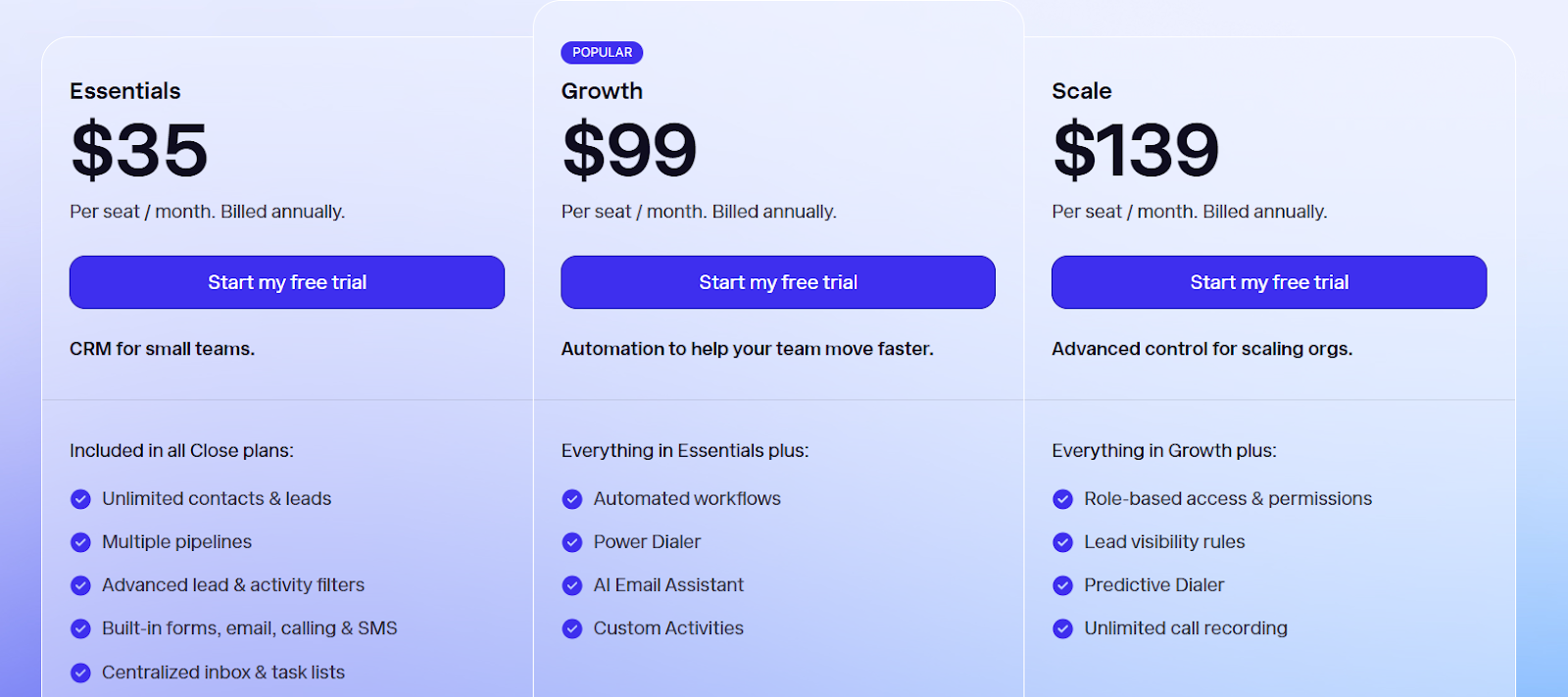
| Close CRM | CRM designed specifically for outbound sales teams | Built-in calling, SMS, and email sequences | Startups with SDR teams running high-volume outbound sales | Paid plans start around $35/per seat/month |
1. Saleoid
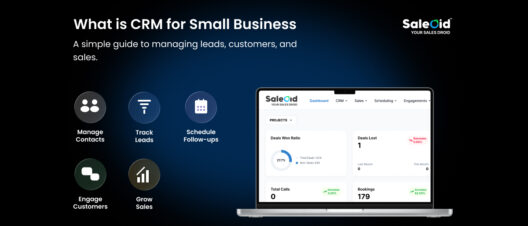
Saleoid is a modular CRM for sales pipeline management for startups, designed with startups, solo founders, and small sales teams in mind. Instead of forcing businesses into a large, expensive CRM ecosystem from day one, it allows teams to build the system around what they actually need.
For early-stage companies, this flexibility matters. Startups often begin with a simple deal tracking process and gradually need more structure as the sales pipeline grows. Saleoid supports that evolution without requiring teams to adopt an oversized platform or pay for tools they are not using yet.
The platform focuses on keeping pipeline management clear and practical. Teams can organize deals across customizable pipeline stages, track every interaction tied to a deal, and monitor how opportunities progress from first contact to closing.
One feature that helps teams prioritize their efforts is the win probability scale, which allows sales reps to estimate how likely a deal is to close based on its current stage and engagement level.
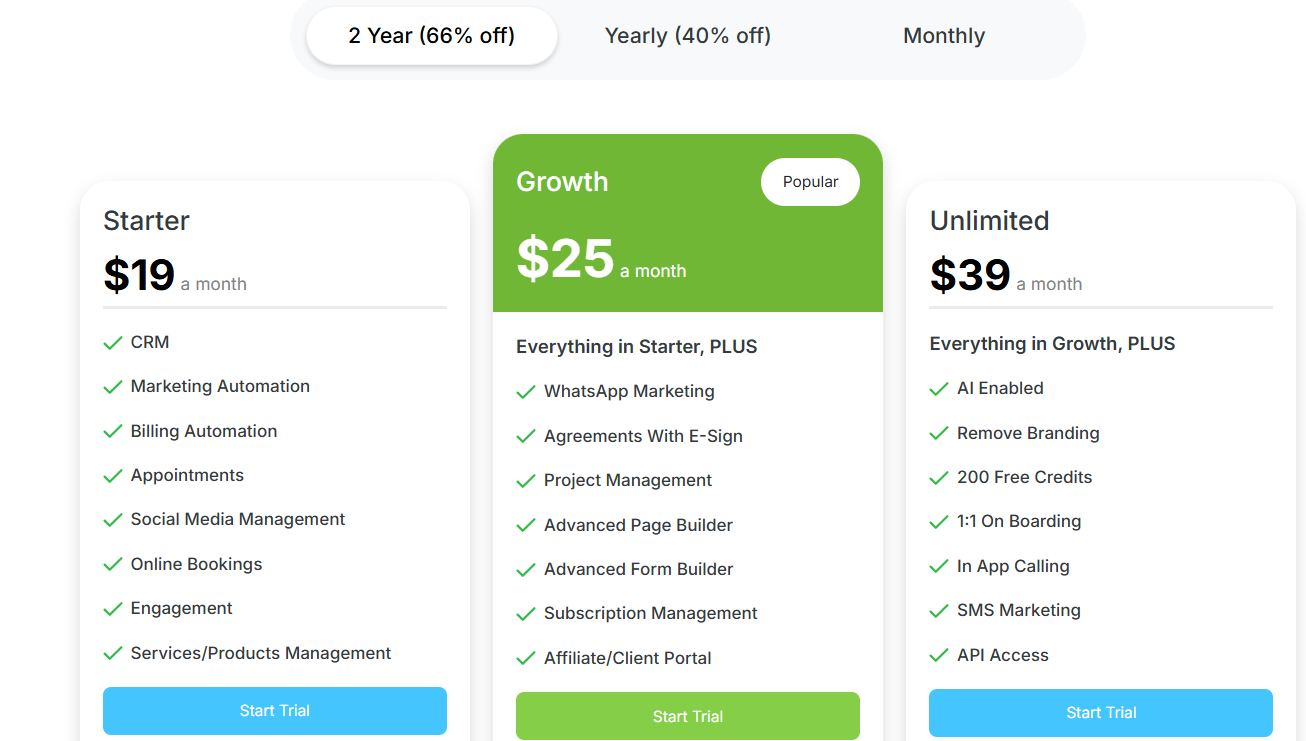
Another advantage of Saleoid is its pricing structure, which is designed specifically for startups working within tight budgets. Businesses can choose between custom plans and bundled plans depending on how much functionality they need. The platform starts with a $5 per month plan that allows teams to add only the tools they need. Additional apps can be added later as the business grows, typically at $1 per app. For teams that prefer a more complete setup from the beginning, bundled plans start at $19 per month.
This approach means startups are not forced into buying a large technology stack upfront. Instead, they can start with a lightweight CRM setup and gradually expand the system as their sales operations become more sophisticated.
Key Features
- Customizable pipeline stages that match your actual sales process
- Visual deal board with drag-and-drop pipeline management
- Contact and company records linked directly to deals
- Activity tracking across calls, emails, and meetings
- Deal reminders and follow-up alerts to keep pipelines active
- Win probability scale to estimate the likelihood of closing each deal
- Reporting dashboards showing pipeline value, deal health, and stage performance
- Flexible pricing with custom plans and bundled plans
Best For
Startups, solopreneurs, and small sales teams that want a straightforward pipeline CRM without the cost or complexity of enterprise platforms. It works particularly well for teams moving beyond spreadsheets who need clear deal tracking and a CRM that can expand as their sales process grows.
Pricing Snapshot
2. Pipedrive
Pipedrive is one of the most established pipeline-focused CRMs on the market and has long been a go-to tool for sales pipeline management for startups and teams seeking a clean deal-management experience. Salespeople rather than engineers built it, and that philosophy shows in its interface; everything is organized around the deal, and the pipeline view is the centre of the experience.
For startups that are primarily focused on closing outbound deals and want a tool their reps can use without much training, Pipedrive is a solid choice.
Key Features
- Visual Kanban-style pipeline with drag-and-drop deal management
- Activity reminders and task scheduling
- Email sync and open tracking
- Workflow automation on mid-tier plans and above
- Reporting and revenue forecasting
- Large library of integrations with third-party tools
Best For
Startups with an active outbound motion and two or more reps who need a clean, deal-centric interface that’s fast to learn and easy to maintain.
Pricing Snapshot
3. HubSpot CRM
HubSpot is probably the most widely recognized name in CRM largely because of its free tier. The free CRM gives early-stage teams contact management, basic deal tracking, and a pipeline view without spending a dollar, which makes it a natural starting point for companies that have nothing in place and need to move quickly.
The trade-off is that HubSpot’s deeper features, like automation, advanced reporting, sequences, sit behind paid tiers that get expensive as your team grows. Still, for a startup just getting organized, the free plan is genuinely functional.
Key Features
- Free initial plan with core CRM features
- Visual pipeline with deal tracking and stage management
- Email templates and tracking
- Live chat and form integrations for lead capture
- Meeting scheduling tools
- Paid tiers add marketing automation, sequences, and advanced analytics
Best For
Startups that need free CRM with basic sales features without any upfront cost, especially teams that also want marketing and sales in one ecosystem as they scale.
Pricing Snapshot
4. Zoho CRM
Zoho CRM is a highly customizable startup CRM software option that punches above its weight class at lower price points. It covers the full range of CRM functions, including pipeline management, contact tracking, automation, and analytics. Its flexibility makes it adaptable to a range of sales processes.
The downside is that this flexibility comes with a steeper learning curve than simpler tools. There are a lot of settings, a lot of modules, and the interface can feel dense to new users. Teams that are willing to invest setup time can build something powerful; teams that want to be live in a day may find it overwhelming. Read Pipedrive vs Zoho CRM comparison.
Key Features
- Multi-pipeline support with customizable stages
- Automation workflows, including lead assignment and follow-up triggers
- AI-powered lead scoring (Zia) on higher plans
- Solid native email integration
- Extensive integrations with the broader Zoho product ecosystem and third-party tools
- Detailed analytics and forecasting dashboards
Best For
Startups with slightly more complex sales processes or those already using Zoho’s broader product suite (Zoho Books, Zoho Desk, etc.) who want tight integration within one ecosystem.
Pricing Snapshot
5. Freshsales
Freshsales is an AI-powered CRM for small sales teams developed by Freshworks. Its standout feature is Freddy AI, which assists with lead scoring, deal insights, and sales forecasting without requiring reps to set up complex rules manually. For startups that want data-driven selling support without a data team, Freshsales delivers surprisingly sophisticated intelligence at an accessible price.
The interface is clean and the onboarding process is relatively smooth, thus a good fit for startups that want capability without a heavy implementation burden.
Key Features
- Freddy AI for lead scoring, deal insights, and next-best-action suggestions
- Visual sales pipeline with drag-and-drop deal cards
- Built-in phone and email tools with activity logging
- Workflow automation for routine tasks and follow-ups
- Contact timelines showing full interaction history
- Integrated chat and web form lead capture
Best For
Startups that want AI-assisted selling guidance alongside standard pipeline management tools particularly teams dealing with high lead volumes where manual scoring isn’t realistic.
Pricing Snapshot
6. Monday Sales CRM
Monday Sales CRM is built on top of Monday.com’s project management platform, which gives it one notable advantage over dedicated CRM tools: it’s visually flexible in a way that most sales software isn’t. Teams that already love how Monday.com manages work will feel immediately at home with its CRM layer.
The pipeline views are highly visual, customizable, and easy to read at a glance. For founders and sales managers who think visually and want a pipeline that functions more like a live dashboard, it’s an appealing choice.
Key Features
- Highly visual, color-coded pipeline boards
- Customizable columns and views (Kanban, table, chart, timeline)
- Automation recipes for common sales workflows
- Email sync and tracking
- Reporting dashboards with custom metrics
- Native integrations with Slack, Gmail, Zoom, and other common startup tools
Best For
Startups that already use Monday.com for project management and want their crm pipeline management in the same workspace, or teams that prioritize visual clarity and flexibility over deep CRM-specific features.
Pricing Snapshot
7. Close CRM
Close is a tool for sales pipeline management for startups built specifically for outbound sales teams, teams that live on the phone, run high-volume call sequences, and need a CRM that makes it fast to move through a large list of prospects without losing detail. Its built-in calling, SMS, and email tools are a genuine differentiator for teams doing serious outbound volume.
For startups running aggressive outbound motions, SDR teams, sales-led growth companies, or businesses selling into high-volume mid-market accounts, Close CRM is purpose-built for that workflow in a way most tools aren’t.
Key Features
- Built-in calling with automatic call recording and logging
- Built-in SMS and email sequences
- Smart Views for filtering and prioritizing leads by activity, status, or stage
- Pipeline management with custom stages and deal value tracking
- Power Dialer and Predictive Dialer features on higher plans
- Clean reporting on activity volume and conversion rates
Best For
Startups with dedicated outbound SDR teams or sales reps doing high-volume calling and emailing who need a deal tracking CRM that eliminates the friction of switching between their CRM and communication tools.
Pricing Snapshot
Best Budget-Friendly Options for Seed-Stage Teams
If you’re pre-revenue or just past it, price matters more than feature depth. Saleoid ($5/month to start), HubSpot’s free tier, and Freshsales’ free plan are the lowest-friction entry points, while Pipedrive and Monday Sales CRM sit in the $12–$14/user range once you outgrow a free plan. The tools to be cautious with are ones like Close CRM ($35+/seat), which are built for teams already running dedicated outbound motions rather than a founder-led sales process.
How to Choose the Right Pipeline CRM for Startups

7 tools mean 7 different answers depending on what you’re actually building and how you sell. Below is a framework for narrowing it down without overthinking it.
1. Start with team size and growth projection
A two-person founding team has completely different needs than a ten-person sales org. The SBA’s own guidance on planning a sales strategy echoes this, matching your approach to your actual sales process and market, not a generic template, before you invest in tooling. If you’re small today but planning to hire aggressively in the next year, consider whether the tool’s pricing scales reasonably at 5x or 10x your current team size.
2. Be honest about process complexity
Not every startup has a five-stage sales cycle with multiple stakeholders and approval gates. Some early-stage companies sell in two calls. Others run six-month enterprise deals. The CRM pipeline management features you need should match the actual complexity of your deals, not the complexity you imagine you might have someday. Start simple and add layers as your process actually requires them.
3. Integrations with tools you already use
A CRM that doesn’t connect to your email, Slack, or calendar creates double-work, and double-work is how adoption breaks down. Before committing, confirm that the tools your reps use every day integrate cleanly with the CRM you’re evaluating. Native integration is almost always better than a workaround built on Zapier.
4. Prioritize adoption over features
The best pipeline management tools are the ones your team actually uses. A CRM with 100 features that half your reps ignore is less valuable than a simple CRM for startups that everyone opens every morning. Involve your reps in the evaluation. Let them test the tool. Their willingness to use it daily matters more than any feature checklist. If you want to compare broader options beyond pipeline-first tools, this list of the best sales CRM for startups can help you evaluate what fits your team best.
5. Evaluate automation early
Manual processes don’t scale. Even a small startup benefits from automating follow-up reminders, lead assignments, and stage-change notifications. Look for a tool that offers meaningful automation without requiring a developer to configure it.
Pipeline Metrics Worth Tracking for Small Teams
You don’t need a dashboard full of KPIs when your whole sales team fits around one table. For teams under 20 people, five numbers matter more than the rest: win rate, average deal size, sales cycle length, conversion rate at each stage, and number of active deals per rep. Track these weekly, not monthly, at this size, one lost deal or one slow week is a bigger swing in your numbers than it would be for a larger team.
FAQs
Yes, Zoho CRM offers multi-pipeline support, automation workflows for lead assignment and follow-up triggers, and AI-powered lead scoring on higher plans. It works best for startups with more complex sales processes, though its depth of settings means a steeper learning curve than simpler tools like Saleoid or Pipedrive.
It depends on how fast you’re scaling. Saleoid works well for teams that want to start lightweight and add functionality as the pipeline grows. Pipedrive suits startups with an active outbound motion, while Zoho CRM fits teams anticipating more complex, multi-stage sales processes as they expand.
Saleoid starts at $5/month for a custom plan, with bundled plans from $19/month. HubSpot CRM and Freshsales both offer functional free tiers to start. Pipedrive and Monday Sales CRM begin around $12–$14/user/month once a team outgrows a free plan.
For most early-stage teams, Saleoid and Pipedrive are the strongest starting points; Saleoid for its modular, low-cost setup, and Pipedrive for its deal-centric, easy-to-learn interface. Teams running heavy outbound with SDRs may prefer Close CRM, which is built specifically for high-volume calling and email sequences.
Final Thoughts
There isn’t a single “best” sales pipeline CRM for startups because startups themselves look very different. A two-person founding team closing their first customers has very different needs from a startup with a dedicated sales team and a growing inbound pipeline.
What holds true across almost every startup is that teams that organize their sales process early tend to close more deals and lose fewer opportunities along the way. That’s where the right pipeline CRM starts to matter.
The tools in this list all approach that problem in different ways. Some prioritize deep customization, others focus on automation or AI insights. The right choice depends on how your startup sells today and how you expect your sales process to evolve over the next year.
If you’re looking for a CRM that keeps things simple while still giving your team real visibility into the pipeline, Saleoid $5 CRM is a strong option to evaluate. Its modular approach allows startups to begin with a lightweight setup and expand the system as their sales process grows, rather than committing to a large platform upfront.
When every deal is tracked, every follow-up has a reminder, and every stage of the pipeline is visible, sales stop feeling chaotic and start becoming predictable.
And for a startup, that kind of clarity can make a real difference.
All trademarks, product names, pricings and logos belong to their respective owners and are used for identification/comparison only. Details may change-verify on each vendor’s site.