


If you’ve ever wondered whether your business needs a sales CRM, marketing automation, or a combination of both, you’re not alone. For many growing companies, the difference between these systems is often unclear because both help manage customer communication, store contact data, and support business growth. However, the way they operate and the problems they solve inside a business are very different.
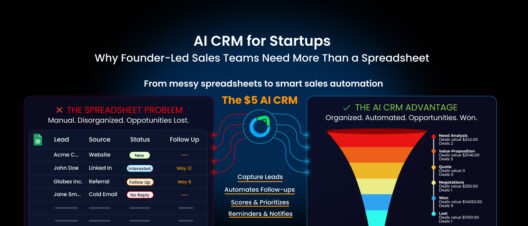
As businesses grow, relying on spreadsheets, manual follow-ups, and disconnected tools often creates operational gaps. Leads get missed, customer conversations become fragmented, and teams struggle to maintain consistent communication.
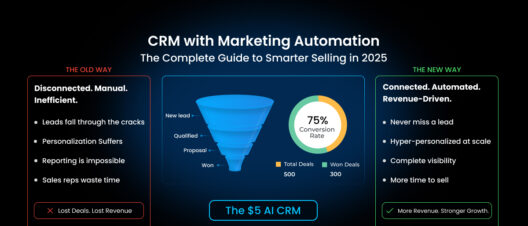
This is exactly why more companies are now searching for the best CRM with marketing automation to manage sales, lead nurturing, and customer engagement from one connected system.
Modern businesses no longer want separate platforms for email campaigns, follow-ups, pipeline tracking, and customer management. Instead, they are moving toward an integrated CRM platform that combines sales workflows and marketing automation in one place.
This approach not only improves visibility across teams but also helps automate repetitive tasks, streamline communication, and create better customer experiences.
In this guide, we’ll break down the differences between sales CRM and marketing automation, explain how each system supports different stages of the customer journey, and help you understand what makes sense for your business stage, workflow, and growth goals.
Whether you’re exploring marketing automation for small businesses or looking for a more connected sales and marketing system, this guide will help you make a clearer and more confident decision.
What is Sales CRM?
At its core, a sales CRM is a system designed to help businesses manage customer relationships, organize sales activities, and improve deal visibility throughout the sales process.
The primary purpose of sales CRM software is to give sales teams a centralized place to track prospects, leads, customers, conversations, and ongoing opportunities without relying on spreadsheets or scattered communication tools.
Think of a sales CRM as the operational hub of your sales process. It does far more than simply store contact information. Modern yet the best CRM with marketing automation tracks every interaction a business has with a lead or customer, including calls, emails, meetings, follow-ups, proposals, and deal activity.
If a prospect downloads a guide, responds to an email, books a demo, or reaches a specific deal stage, the CRM records that information so the entire sales team has complete visibility.
For growing businesses, this visibility becomes extremely important because missed follow-ups and disorganized customer communication often lead to lost revenue opportunities.
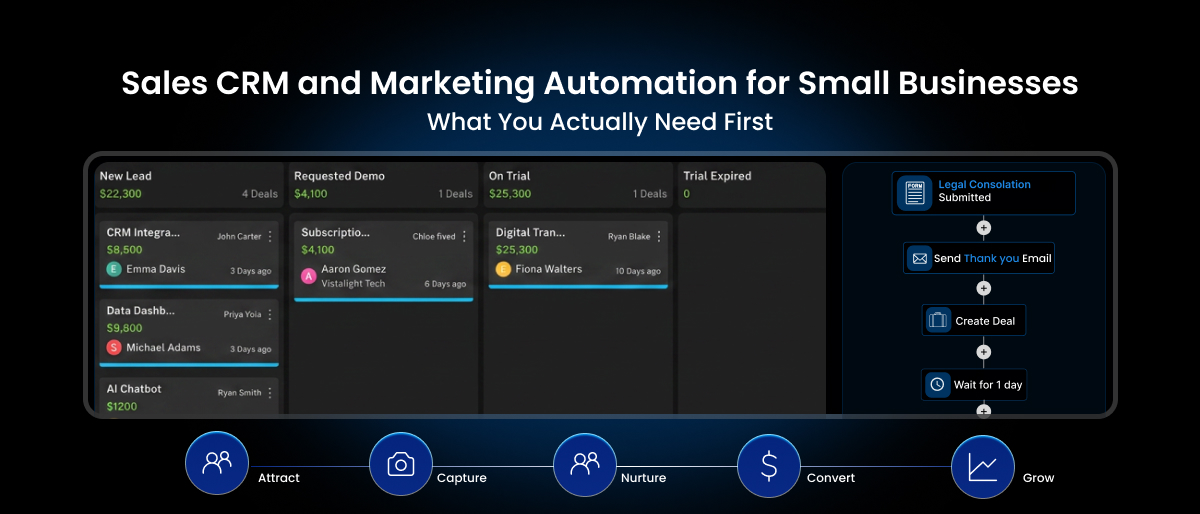
One of the most valuable parts of a sales pipeline CRM is the ability to visualize where every deal currently stands inside the sales journey. Businesses can track stages such as:
- New Lead
- Qualified Prospect
- Proposal Sent
- Negotiation
- Closed Won
- Closed Lost
This structured pipeline management helps sales teams prioritize opportunities, forecast revenue more accurately, and maintain consistent follow-up processes.
Best CRM with marketing automation also reduces manual administrative work by automating repetitive sales tasks such as:
- follow-up reminders
- lead assignments
- task creation
- deal stage updates
- notification triggers
- activity tracking
As businesses grow, automation helps sales teams stay organized without increasing operational complexity.
Key Functions of a Sales CRM
- Contact Management: Store customer names, emails, phone numbers, company details, communication history, and activity timelines inside one organized database.
- Sales Pipeline Management: Track and manage deals visually through every stage of the sales process using a structured sales pipeline CRM.
- Interaction Tracking: Log calls, emails, meetings, notes, and customer activities so every team member has complete visibility into ongoing conversations.
- Task and Follow-Up Management: Automatically remind sales teams about follow-ups, pending proposals, scheduled calls, and next actions to reduce missed opportunities.
Who Uses Sales CRM Software?
Sales CRM software is commonly used by:
- Sales Representatives
- Founders
- Account Managers
- Consultants
- Agencies
- Business Development Teams
- Customer Relationship Managers
For many small businesses, the best CRM with marketing automation becomes the foundation for building a more organized, scalable, and predictable sales process.
What is Marketing Automation?
While sales CRM software focuses mainly on one-to-one sales interactions and relationship management, marketing automation software is built for one-to-many communication at scale.
It is designed to help businesses automate, manage, and measure marketing activities across different stages of the customer journey.
A sales CRM software helps businesses organize pipelines, track customer conversations, and automate sales follow-ups from one centralized system.
Marketing automation, on the other hand, focuses more on generating leads, nurturing prospects, and maintaining ongoing engagement before a sales conversation even begins.
The best CRM with marketing automation primarily supports the top and middle stages of the funnel. Its goal is to attract potential customers, educate them through personalized communication, and gradually move them toward becoming sales-ready leads.
Instead of manually sending emails, tracking engagement, or managing repetitive communication tasks, businesses can automate these workflows using predefined rules and customer behavior triggers.
For growing businesses, this becomes especially important because manually handling lead nurturing at scale quickly becomes difficult as contact volume increases.
Modern marketing automation platforms help businesses:
- Nurture Leads Automatically
- Improve Customer Engagement
- Personalize Communication
- Segment Audiences
- Automate Repetitive Workflows
- Track Marketing Performance
- Align Marketing Efforts with Sales Goals
Unlike a sales pipeline CRM, which focuses on managing deals and sales stages, marketing automation focuses on building interest and maintaining engagement until prospects are ready for direct sales interaction.
Many modern CRM automation software platforms now combine both sales CRM and marketing automation capabilities inside one connected system to improve visibility across teams and reduce operational silos.
Key Functions of Marketing Automation
- Email Campaign Automation: Send newsletters, promotional campaigns, drip sequences, onboarding emails, and behavior-triggered communication automatically at scale.
- Lead Generation and Capture: Create landing pages, forms, pop-ups, and lead capture workflows to collect prospect information directly into the system.
- Lead Nurturing Workflows: Automatically send educational or personalized content based on customer behavior, interests, engagement level, or funnel stage.
- Lead Scoring and Qualification: Assign scores to leads based on actions such as email opens, clicks, website visits, downloads, or pricing-page activity to identify high-intent prospects.
- Audience Segmentation: Group contacts based on demographics, behavior, industry, interests, or engagement history to deliver more targeted campaigns.
Who Uses Marketing Automation?
Marketing automation platforms are commonly used by:
- Marketing Teams
- Growth Marketers
- Demand Generation Specialists
- Founders
- Agencies
- Saas Businesses
- E-Commerce Brands
- Customer Engagement Teams
For many businesses, marketing automation becomes the foundation for creating scalable lead nurturing and customer communication processes without significantly increasing manual workload.
Where Sales CRM and Marketing Automation Overlap
One of the biggest reasons businesses struggle to differentiate between sales CRM and marketing automation is that both systems share several similar capabilities. Both manage contacts, track interactions, send emails, and automate workflows. However, the intent behind those features is completely different. Modern all-in-one CRM software platforms increasingly combine both systems to improve sales and marketing alignment and reduce operational silos.
1. Both Store Contact Information
Both platforms maintain customer and lead databases containing names, emails, company information, communication history, and engagement activity. The difference lies in how the data is used. The best CRM with marketing automation focuses on managing active relationships and deal progress, while marketing automation uses customer data to segment audiences and automate communication at scale.
2. Both Send Emails, But for Different Purposes
Marketing automation platforms are built for campaigns, newsletters, drip sequences, and behavior-triggered emails sent to large audiences. Sales CRM software focuses more on direct communication such as follow-ups, meeting reminders, proposals, and one-to-one conversations. One supports mass engagement, while the other supports relationship-driven sales communication.
3. Both Track Customer Engagement
Both systems monitor customer activity, but they measure different business outcomes. Marketing automation tracks engagement metrics such as email opens, clicks, downloads, and website visits to understand lead interest. A sales CRM tracks calls, meetings, pipeline stages, and deal progress to measure revenue opportunities and sales performance.
4. Both Automate Workflows
Automation exists in both platforms, but the workflows serve different teams. Marketing automation creates behavior-based workflows like lead nurturing, onboarding emails, and re-engagement campaigns. CRM automation software focuses more on sales operations such as task reminders, lead assignments, follow-up scheduling, and pipeline updates that help sales teams stay organized.
5. Both Provide Reporting and Analytics
Marketing automation platforms generate reports focused on campaign performance, lead generation, and customer engagement. Sales CRM systems focus more on revenue forecasting, deal velocity, win rates, and pipeline visibility. Together, these insights help businesses understand both marketing effectiveness and sales performance from a broader operational perspective.
Because both systems overlap in functionality, many businesses assume one platform can fully replace the other. In reality, their core objectives are very different. Marketing automation is designed to generate and nurture interest, while sales CRM helps convert that interest into revenue and long-term customer relationships. This is why more businesses are now moving toward the best CRM with marketing automation that combines both systems into one connected workflow.
Key Differences: Sales CRM vs Marketing Automation
To truly understand sales CRM vs marketing automation differences, you need to look beyond features and focus on intent. While both systems manage contacts and communication, they are built to solve different business problems. Let’s see how they differ across key dimensions:
1. The Audience They Serve
Marketing automation targets leads at scale, people who may still be researching, comparing options, or exploring solutions. The communication is broad but behavior-driven.
Sales CRM focuses on individual prospects and customers who are actively in conversation with your business. The interaction is personal and relationship-based.
Marketing automation speaks to many. Sales CRM supports one conversation at a time.
2. The Primary Goal
The goal of marketing automation is to generate and nurture leads, people who have shown interest but may not be ready to buy yet. In technical terms, these are often called Marketing Qualified Leads (MQLs), meaning they’ve engaged enough to be considered potential opportunities.
The goal of sales CRM is to help sales teams convert the most promising leads into paying customers. These sales-ready prospects are sometimes referred to as Sales Qualified Leads (SQLs).
Thus, sales CRM takes interested contacts and turns them into real revenue through structured follow-ups and relationship management.
One generates and nurtures demand. The other closes and expands it.
3. Timing in the Customer Journey
Marketing automation operates mainly in the awareness and consideration stages. It educates and warms up potential buyers.
Sales CRM becomes critical during the decision stage and beyond, tracking negotiations, closing deals, onboarding, renewals, and retention.
Marketing automation builds momentum. Sales CRM manages commitment and long-term value.
4. Data Model: Deals vs Segments
A sales CRM is structured around deals, pipelines, and opportunities. Every contact is connected to a potential revenue outcome and a defined sales stage.
Marketing automation is structured around lists, audiences, and segments. Contacts are grouped based on behavior, interests, or demographics to receive targeted campaigns.
Sales CRM organizes revenue progression. Marketing automation organizes communication groups.
5. Ownership: Sales-Led vs Marketing-Led
Sales CRM platforms are primarily owned and managed by the sales team. Sales representatives update deal stages, log calls, and manage follow-ups.
Marketing automation tools are typically owned by the marketing team, who build campaigns, nurture sequences, and lead scoring systems.
While both teams may access data, the daily operational ownership differs significantly.
6. Primary Automations: Follow-Ups vs Campaign Journeys
Sales CRM automation focuses on sales process automation, such as:
- Creating follow-up tasks
- Updating deal stages
- Sending proposal reminders
- Assigning leads to reps
Marketing automation focuses on campaign-driven workflows, such as:
- Drip email sequences
- Behavior-triggered emails
- Lead nurturing journeys
- Re-engagement campaigns
One automates human follow-ups. The other automates scaled communication.
7. Reporting & Metrics: Revenue vs Engagement
Sales CRM reporting is centered on revenue performance:
- Pipeline value
- Win rates
- Deal velocity
- Forecasted revenue
- Customer retention
Marketing automation reporting focuses on engagement and lead performance:
- Email open and click rates
- Conversion rates
- Cost per lead
- Campaign ROI
- Lead attribution
Sales CRM answers: “How much revenue are we closing?” Marketing automation answers: “How well are we generating and nurturing interest?”
8. Lifecycle Focus: Pre-Sale vs Post-Sale Depth
Marketing automation operates primarily in the early and middle stages of the buyer journey, i.e. awareness, education, and consideration.
Sales CRM becomes critical during the decision and post-sale stages, managing negotiations, onboarding, renewals, upsells, and ongoing account relationships.
Marketing automation builds momentum. Sales CRM builds long-term value.
9. Personalization Style: Human-Led vs Rule-Based
Sales CRM personalization is typically rep-driven. Salespeople tailor messages based on conversations, deal context, and individual relationship history.
Marketing automation personalization is rule-driven. It uses conditions like behavior, tags, or segmentation rules to automatically deliver relevant content.
Both personalize, but one relies on human judgment, the other on predefined logic.
Want a deeper comparison? Read our complete guide on CRM vs Marketing Automation to understand when businesses need each system and when they work best together.
Comparison Table: Sales CRM vs Marketing Automation Differences
Below is a detailed breakdown of how the two technologies stack up against each other in the best CRM with marketing automation :
| Feature / Aspect | Sales CRM | Marketing Automation |
| Primary Purpose | Manage sales relationships and close deals | Generate, nurture, and qualify leads |
| Core Focus | Revenue, pipeline, and customer retention | Engagement, campaigns, and lead development |
| Data Structure | Deals, opportunities, sales stages | Lists, segments, and behavior-based groups |
| Main Users | Sales reps, account managers, founders | Marketing teams, growth managers |
| Communication Style | One-to-one, relationship-driven | One-to-many, behavior-driven |
| Type of Automation | Follow-ups, task reminders, deal updates | Drip campaigns, trigger-based workflows |
| Reporting Metrics | Pipeline value, win rates, revenue forecasting | Open rates, click rates, conversions, attribution |
| Customer Journey Stage | Decision, purchase, post-sale management | Awareness, consideration, pre-sale nurturing |
| Personalization Method | Human-led personalization by sales reps | Rule-based personalization using segmentation |
| Post-Sale Role | Manages renewals, upsells, and retention | Limited unless integrated with sales CRM |
| Typical Outcome | Increased deal closure and revenue visibility | Increased lead generation and engagement |
While sales CRM and marketing automation share some features, their core objectives differ. Sales CRM turns qualified interest into revenue, while marketing automation builds and nurtures that interest at scale.
Sales CRM vs Best CRM with Marketing Automation: Which One Do You Need?
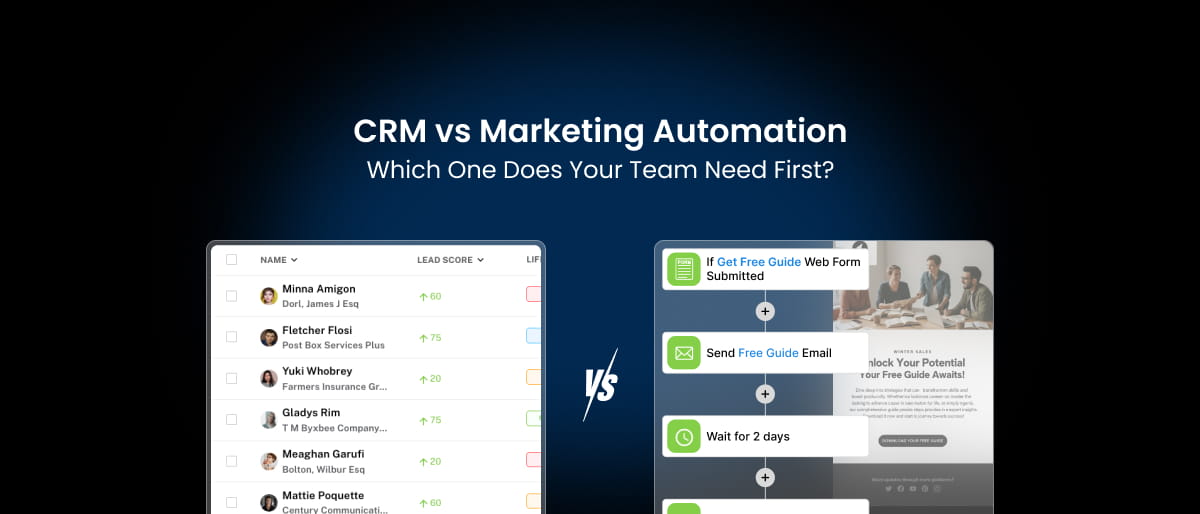
This is one of the most common questions small business owners ask when evaluating business software. The honest answer depends entirely on where your biggest operational challenge exists right now.
Some businesses struggle with managing leads and follow-ups, while others struggle with generating and nurturing enough qualified prospects consistently.
If your sales process feels disorganized, a sales CRM usually becomes the first priority. If your biggest issue is lead nurturing and customer engagement, marketing automation may deliver faster results.
For many growing companies, however, the real solution is finding the best CRM with marketing automation that combines both systems into one connected workflow.
Here’s the simplest way to think about it.
You Need Best CRM with Marketing Automation If…
Marketing automation for small businesses becomes valuable when lead generation and customer nurturing start becoming difficult to manage manually. If your business receives inquiries regularly but lacks a structured follow-up process, automation can help maintain engagement without increasing manual workload.
You’ll likely benefit from marketing automation if:
- You manually send welcome or follow-up emails
- Leads go cold because there is no nurturing system
- You run campaigns but cannot identify high-intent prospects
- You want landing pages, forms, and automated email workflows
- Your business relies heavily on inbound lead generation
Marketing automation helps businesses educate, nurture, and warm up potential customers before direct sales conversations begin.
You Need a Sales CRM If…
A sales CRM becomes essential when businesses struggle to manage customer conversations, follow-ups, and deal visibility effectively. Many small businesses initially manage sales through spreadsheets, inboxes, or scattered notes, but this quickly becomes difficult as lead volume increases.
You’ll likely need sales CRM software if:
- Follow-ups are inconsistent
- Deals are slipping through the cracks
- Your pipeline lacks visibility
- Sales conversations are scattered across multiple platforms
- You need structured deal tracking from first contact to closed sale
The best CRM with marketing automation gives businesses more control over their sales process by organizing opportunities, tracking customer interactions, and improving accountability across the team.
Most Growing Businesses Eventually Need Both
For many CRM for startups and CRM for growing businesses use cases, the real challenge is not choosing between sales CRM and marketing automation. The challenge is making sure both systems work together from the same customer data.
When sales and marketing operate separately, businesses often face:
- Disconnected customer information
- Inconsistent follow-ups
- Duplicate communication
- Reporting gaps
- Poor sales and marketing alignment
This is exactly why many companies now prefer integrated platforms that combine CRM automation software and marketing automation inside one connected system. Instead of managing separate tools, businesses can centralize lead management, customer communication, automation workflows, and sales tracking in one place.
As businesses grow, alignment between sales and marketing becomes less of a feature and more of a necessity for scalable growth.
Learn how businesses combine both systems in our guide to CRM with Marketing Automation, including workflows, lead nurturing, automation, and real-world use cases.
Best Tool Setup by Business Stage
Choosing between sales CRM and marketing automation becomes easier when you look at your current business stage. Your team size, contact volume, and workflow complexity should guide your decision.
1. Solo Founder (Under 500 Contacts)
At this stage, simplicity matters more than complexity.
Most solo founders are juggling sales, marketing, support, and operations. The biggest risk is losing track of conversations and follow-ups.
Recommended Approach: Sales CRM First
Why:
- You need visibility into deals and conversations.
- Follow-ups should never depend on memory.
- A simple sales pipeline crm gives structure to your sales process.
- Basic email capabilities are often enough at this stage.
Marketing automation can wait unless you’re running heavy inbound campaigns. For many solo founders, organizing relationships properly is the first priority.
2. Small Team (2–10 People)
At this stage, coordination becomes the challenge.
You may now have:
- One or two sales reps
- Someone handling marketing
- Growing inbound leads
- Increasing contact volume
The risk shifts from “forgetting leads” to misalignment between marketing and sales.
Recommended Approach: Sales CRM + Light Automation
Why:
- Sales needs structured pipeline tracking.
- Marketing needs nurture sequences for new leads.
- Lead scoring helps prioritize sales effort.
- Shared visibility improves follow-up timing.
This is often the stage where businesses feel friction between separate tools. Having sales CRM and marketing automation connected (or unified) starts delivering real efficiency gains.
3. Growing Team (10–30 People)
Now, complexity increases significantly. You may have:
- Dedicated sales roles
- A marketing team running campaigns
- Multiple lead sources
- Higher deal volume
- Forecasting needs
Manual handoffs become risky, and disconnected systems create reporting gaps.
Recommended Approach: Combined System (Integrated or All-in-One)
Why:
- Marketing engagement data should flow directly into sales conversations.
- Lead scoring must trigger structured sales workflows.
- Reporting should connect campaign performance to closed revenue.
- Post-sale retention and upsell tracking become important.
At this stage, running sales CRM and marketing automation separately without tight integration often leads to inefficiencies and duplicated effort.
Quick Summary by Stage
- Solo founder: Sales CRM-first for structure and control.
- Small team: Sales CRM + automation working together.
- Growing team: Fully integrated system for alignment and reporting.
The right setup is all about matching your systems to your operational complexity.
The Problem with Separate Tools (The “Silo” Effect)
Traditionally, businesses used separate platforms for sales and marketing. One tool handled email campaigns and lead nurturing, while another managed pipelines, deals, and customer relationships. While this setup may seem manageable initially, it often creates one of the biggest operational problems growing businesses face: disconnected business tools and fragmented customer data.
When marketing and sales systems operate separately, information stops flowing smoothly between teams. For example, a prospect may click multiple campaign emails, visit pricing pages, or download resources, but the sales team may never see that activity inside the CRM. Similarly, if a sales representative marks a lead as uninterested, the marketing system may continue sending promotional campaigns because both platforms are not fully synchronized.
This lack of visibility creates communication gaps and inconsistent customer experiences. Businesses may accidentally send discount offers to recently converted customers, duplicate follow-ups, or miss important buying signals entirely. Over time, these small operational gaps affect customer trust, team efficiency, and overall conversion performance.
An integrated CRM platform solves this problem by centralizing customer data, communication history, and automation workflows inside one connected system. Instead of switching between disconnected business tools, sales and marketing teams work from shared information with complete visibility into customer interactions across the entire journey.
This is one reason why many businesses now prefer the best CRM with marketing automation instead of relying on separate platforms connected through complicated integrations. A connected system improves collaboration, reduces reporting gaps, strengthens sales and marketing alignment, and creates a far more consistent customer experience as the business grows.
The Solution: An All-in-One Platform like Saleoid
The modern approach to sales CRM and marketing automation is no longer about choosing one over the other. Growing businesses now need both systems working together inside the same workflow. The best results happen when customer communication, lead nurturing, pipeline management, and sales activity operate from one connected environment instead of separate tools.
This is exactly why Saleoid was built. Rather than functioning only as a sales CRM or only as a marketing tool, Saleoid is designed as an all-in-one CRM software platform for small businesses that want operational simplicity without sacrificing flexibility. It combines CRM with automation, lead management, customer communication, and workflow visibility inside one connected system.
Looking for an affordable CRM with built-in marketing automation? View Saleoid Pricing to see plans designed for startups and growing businesses without expensive add-ons.
Many businesses struggle because marketing data lives in one platform while sales conversations happen somewhere else. This disconnect creates fragmented customer journeys, delayed follow-ups, inconsistent communication, and reporting gaps. Saleoid helps solve this problem by bringing both functions together through a shared operational workflow.
1. Shared Customer Visibility
One of the biggest advantages of an integrated system is having centralized customer data accessible to both sales and marketing teams. Inside Saleoid, teams can view customer activity, email engagement, website interactions, follow-up history, and deal progress from one unified record without relying on complicated syncing between platforms.
This improves visibility across the customer journey and helps teams respond with better timing and context.
2. Unified Lead Scoring and Automation
Modern AI CRM software should not only store customer information but also help businesses identify buying intent more efficiently. Saleoid combines marketing engagement and sales activity into one lead scoring system, allowing businesses to prioritize high-intent prospects automatically.
For example, a lead who opens emails, visits pricing pages, and requests a demo can instantly trigger sales notifications or automated workflows. This helps businesses reduce manual monitoring while improving response speed.
3. Connected Sales and Marketing Workflows
Instead of operating through disconnected business tools, Saleoid allows businesses to automate customer journeys across both sales and marketing functions.
For example:
- A visitor submits a form
- The system enrolls them into a targeted email sequence
- Engagement activity updates the lead score automatically
- Sales receives notifications when buying intent increases
This creates a smoother customer journey where communication feels timely, personalized, and connected across every stage.
4. Flexible Growth Without Forced Bundles
Many platforms require businesses to purchase large bundled plans even when they only need a few core features. Saleoid takes a more flexible approach by allowing businesses to activate the tools they actually need.
Whether a business needs:
- CRM With Email Marketing
- Pipeline Management
- Automation Workflows
- Customer Follow-Ups
- Lead Tracking
- Scheduling
- Communication Management
the system can adapt without forcing unnecessary upgrades or feature overload.
5. Operational Simplicity for Growing Businesses
As businesses grow, managing multiple disconnected platforms often creates higher costs, operational complexity, and reporting friction. Saleoid helps simplify this process by functioning as the best CRM with marketing automation for businesses that want sales and marketing alignment without managing multiple systems separately.
Instead of constantly switching between tools, teams can manage:
- Customer Communication
- Sales Pipelines
- Marketing Automation
- Lead Nurturing
- Follow-Ups
- Reporting
from one centralized workflow.
By combining CRM with automation inside a flexible framework, Saleoid helps small businesses improve efficiency, reduce operational silos, and scale customer communication without adding unnecessary complexity.
Conclusion
When it comes to sales CRM and marketing automation, the goal is not to decide which system is better. Both solve different operational problems inside a business. Marketing automation for small businesses helps generate interest, nurture leads, and maintain consistent customer engagement at scale. Sales CRM systems help businesses organize pipelines, manage customer relationships, track deals, and turn opportunities into revenue.
For most businesses in 2026, the bigger challenge is not choosing one tool over another. It is building a connected workflow where sales and marketing operate from the same customer data instead of relying on disconnected systems.
The best CRM with marketing automation is not necessarily the platform with the longest feature list. It is the one that fits naturally into your workflow, simplifies operations, and helps your business scale without creating unnecessary complexity. For many teams, especially CRM for growing businesses, operational visibility and alignment become far more valuable than simply having more features.
Before choosing a platform, businesses should focus on understanding where their biggest operational gaps exist:
- Do you need better lead nurturing?
- Is your sales process disorganized?
- Are marketing and sales working separately?
- Are follow-ups inconsistent?
- Is customer data spread across multiple tools?
As businesses grow, having systems that communicate with each other becomes less of a convenience and more of a necessity. Whether you begin with sales CRM software, marketing automation, or an integrated platform that combines both, the long-term goal remains the same: create a scalable system that supports growth while keeping operations simple, connected, and efficient.
Clarity first. Alignment second. Tools third. Ready to see how Saleoid can transform your sales and marketing process?
[Start Your Free Trial] | [Book a Demo] | [See Saleoid Pricing]
FAQs on Sales CRM vs Marketing Automation
The best CRM with marketing automation for small businesses is one that combines lead management, email automation, sales tracking, and customer communication inside one easy-to-manage system. Small businesses usually benefit most from platforms that reduce the need for multiple disconnected tools while remaining simple enough for teams to adopt quickly. Platforms like Saleoid, HubSpot, and Zoho CRM are commonly considered by businesses looking for an integrated solution.
Yes, modern AI CRM software is becoming increasingly accessible for small businesses. AI-powered CRM platforms help automate repetitive tasks such as follow-ups, lead scoring, email workflows, reminders, and customer engagement tracking. This allows small teams to improve productivity, maintain better customer communication, and manage leads more efficiently without adding operational complexity.
A CRM with email marketing usually focuses on sending newsletters, follow-up emails, and customer communication directly from the CRM. Marketing automation goes further by creating behavior-based workflows that automatically trigger emails, lead nurturing sequences, audience segmentation, and engagement campaigns based on customer actions. In simple terms, email marketing sends campaigns, while marketing automation manages entire customer journeys automatically.
Not every startup needs advanced marketing automation immediately. Early-stage startups often begin with sales CRM software to organize leads and manage follow-ups. However, as lead volume grows and customer communication becomes harder to manage manually, marketing automation software helps startups scale lead nurturing, automate outreach, and improve customer engagement without increasing workload significantly.
An integrated CRM platform combines sales CRM and marketing automation into one connected system. Instead of using separate tools for sales tracking, customer communication, email campaigns, and automation workflows, businesses manage everything from a centralized platform. This improves visibility across teams, reduces data silos, and creates a more consistent customer experience throughout the sales journey.
No, marketing automation is designed mainly to generate, nurture, and engage leads at scale. While it can automate campaigns and customer communication, it does not provide the structured pipeline management, deal tracking, sales forecasting, and relationship visibility that sales CRM software offers. Businesses focused on managing active sales opportunities still need a CRM system for organized sales operations.
Not completely. Many sales CRM platforms include basic email sending and follow-up capabilities, but they usually lack advanced marketing automation features such as audience segmentation, behavioral triggers, lead nurturing workflows, and campaign automation. Businesses running large-scale marketing campaigns or inbound lead generation often require dedicated automation capabilities alongside CRM functionality.
It depends on the stage of the business and how leads are being generated. Businesses relying heavily on website inquiries, email campaigns, content marketing, or inbound lead generation often benefit from marketing automation much earlier. However, many small businesses initially prioritize sales CRM software to organize pipelines and customer relationships before adding advanced automation workflows later.
The right starting point depends on your biggest operational challenge. If your business struggles with missed follow-ups, disorganized pipelines, or poor deal visibility, a sales CRM should usually come first. If your challenge is nurturing leads, managing email campaigns, or automating customer communication, marketing automation may provide more immediate value. Many growing businesses eventually choose an integrated system that combines both functions.
Email marketing usually refers to sending newsletters, announcements, or one-time promotional campaigns to a group of contacts. Marketing automation is more advanced because it creates automated workflows triggered by customer behavior, engagement activity, or funnel stage. It allows businesses to personalize communication and automate lead nurturing over longer customer journeys.
Yes, Saleoid combines sales CRM and marketing automation inside one connected platform. Businesses can manage pipelines, customer communication, email workflows, lead nurturing, follow-ups, and automation from one centralized system instead of relying on multiple disconnected tools.
Marketing automation helps attract, nurture, and qualify leads before direct sales conversations begin. Sales CRM software then helps manage customer relationships, track deals, organize pipelines, and close opportunities. When both systems work together inside an integrated CRM platform, businesses improve sales and marketing alignment, reduce communication gaps, and create a smoother customer experience across the entire buying journey.